
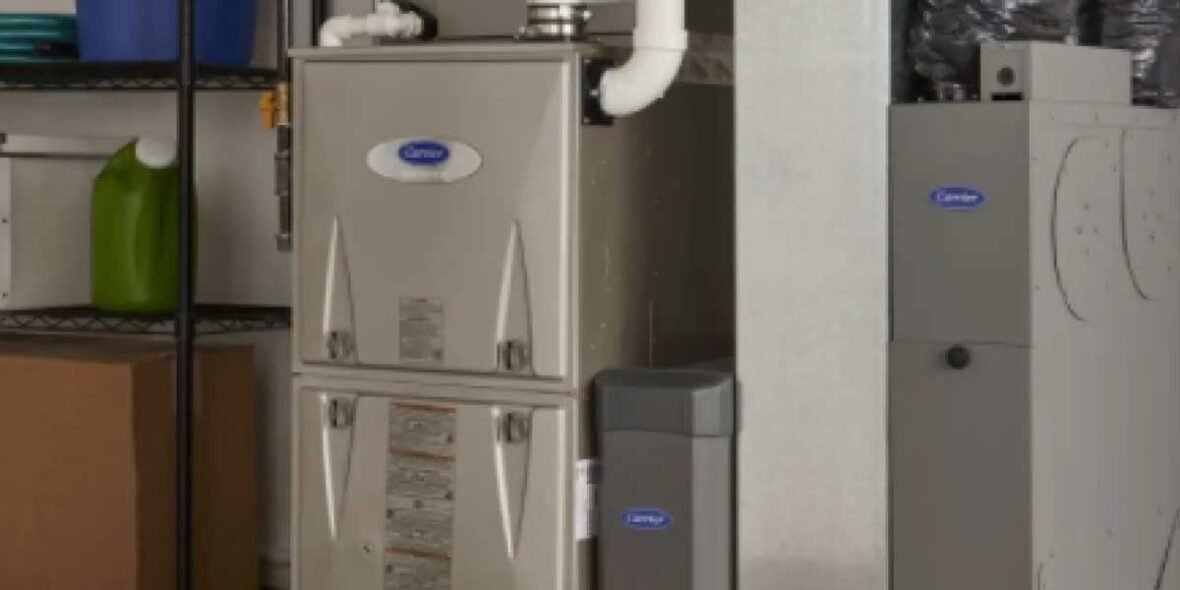
If you are getting quotes for a new heating system, you have probably noticed that HVAC contractors love to recommend two-stage furnaces. They will tell you that paying an extra $500 to $1,500 upfront is a smart investment because it will save you 10% to 15% on your monthly energy bills. You might be wondering if that math actually adds up, or if it is just a sales tactic to upsell you on more expensive equipment.
Here is the honest truth that most heating companies will not tell you: a two-stage furnace is absolutely worth the money, but not for the reasons they are selling it to you.
If you are buying a two-stage furnace expecting to see a dramatic drop in your winter gas bills, you are going to be disappointed. The real value of a two-stage system is not financial — it is about dramatically improving your daily quality of life by eliminating cold spots, reducing noisy blasts of air, and fixing the most common design flaw in American homes.
In this guide, we will cut through the marketing jargon to explain exactly what you are paying for. We will look at real data from homeowners, expose the thermostat trap that ruins many installations, and give you a simple framework to decide if a two-stage furnace is the right choice for your specific home.
What Is a Two-Stage Furnace, Really?
To understand why a two-stage furnace costs more, you need to understand the frustrating reality of how a standard, single-stage furnace operates.
A single-stage furnace is like a light switch. It only has two modes: 100% completely on, or 100% completely off. When your thermostat detects that the house is getting cold, it sends a signal to the furnace. The furnace roars to life at maximum capacity, blasting hot air through your vents until the thermostat is satisfied, and then it abruptly shuts down.
This creates a rollercoaster effect. Your house gets slightly chilly, then suddenly very hot and loud, and then the cycle repeats every 10 to 15 minutes.
A two-stage furnace operates more like a dimmer switch with two settings. It has a “low” stage — usually running at about 60% to 65% of its maximum capacity — and a “high” stage running at 100% capacity. For about 80% of the winter, the furnace will run exclusively on the low stage. It operates quietly and gently, running for longer periods of time to maintain a steady, consistent temperature. It only kicks into the high stage when the temperature outside drops drastically or when you manually turn the thermostat up several degrees at once.
| Feature | Single-Stage Furnace | Two-Stage Furnace |
|---|---|---|
| Operation | On/off at 100% capacity | Low (65%) and high (100%) settings |
| Installed Cost | $2,500–$4,000 | $3,000–$5,000 |
| Energy Efficiency | Standard | Marginally better (5–10% on electricity) |
| Comfort Level | Temperature swings common | Consistent, even temperatures |
| Noise Level | Louder, frequent blasts | Quieter, especially on low stage |
| Estimated Lifespan | 15–20 years | 18–23 years |
The Honest Truth About Energy Savings
If you read standard HVAC blogs, you will see the same claim repeated everywhere: a two-stage furnace will save you 10% to 15% on your energy bills. This claim is highly misleading, and understanding why will save you from making a purchase decision based on false expectations.
The confusion comes from mixing up Annual Fuel Utilization Efficiency (AFUE) ratings with staging technology. If you upgrade from a 20-year-old, 80% AFUE single-stage furnace to a modern 96% AFUE two-stage furnace, your bills will go down significantly. But those savings come from the higher AFUE rating, not the two-stage functionality.
If you compare a 96% efficient single-stage furnace to a 96% efficient two-stage furnace, the actual difference in your monthly gas bill will be negligible. You are still using the same amount of British Thermal Units (BTUs) to heat your home; you are just delivering those BTUs slower and more steadily.
As one experienced homeowner noted in a community discussion:
“They aren’t intended to save any noticeable amount on your utility bill. They are designed for comfort. During really cold weather they never stop, just modulate between the stages. On milder days they run longer cycles. The goal is to keep it running as much as possible to reduce temperature swings in the house.”
— u/Kjriley, r/madisonwi, June 2024
Do not spend the extra $1,000 expecting it to pay for itself in gas savings over the next decade. The math simply does not work out that way. You are paying for comfort, not a financial return on investment.
The Real Reason People Love Two-Stage Furnaces
If it does not save you money, why do HVAC technicians and homeowners consistently recommend two-stage systems? Because it fundamentally changes how your house feels during the winter.
When a two-stage furnace runs on its low setting, it circulates warm air for longer periods. This continuous air movement solves several common household complaints simultaneously.
First, it eliminates the dreaded “cold spots.” In many homes, the rooms furthest from the furnace never quite get warm enough before the thermostat — which is usually located in a central hallway — shuts the system off. By running longer, a two-stage furnace pushes warm air all the way to those distant bedrooms and finished basements.
Second, it provides vastly superior air filtration. Your furnace filter only cleans the air when the blower motor is running. Because a two-stage system runs for longer cycles, your indoor air passes through the filter much more frequently, leading to noticeably less dust and better air quality for anyone with allergies or asthma.
Finally, the noise reduction is dramatic. Instead of the loud “whoosh” of a single-stage system kicking on at full blast, the low stage operates at a near-whisper.
“Went to a 2-stage a couple years ago — consistently lower MG&E bills, consistently quieter, and better balance between floors. Circulating the air at low speed all the time does amazing things. Also, lower dust since going to a 5-inch pleated filter. Very much worth it.”
— u/biff_tyfsok, r/madisonwi, June 2024
Is Your Furnace Oversized? Why That Changes Everything
There is a dirty little secret in the residential HVAC industry: almost every furnace installed in North America is oversized for the home it heats.
Contractors size furnaces based on worst-case scenario temperatures, and they often round up to cover their liability. The result is that you end up with a massive heating system that is far too powerful for what your house needs on an average Tuesday in November.
When an oversized single-stage furnace turns on, it blasts so much heat that it satisfies the thermostat in just a few minutes, causing it to shut off rapidly. This is called “short-cycling.” It puts massive wear and tear on the mechanical components, creates uneven temperatures throughout the house, and leaves you shivering again ten minutes later.
A two-stage furnace is the ultimate practical fix for this industry-wide problem. Even if the contractor installs a unit that is technically too large for your home, the furnace’s ability to run at 65% capacity means it will act like a properly sized, smaller furnace for the vast majority of the winter.
“Since nobody knows how to size equipment properly, get the 2 stage unit. You’ll gain more comfort and efficiency since it’ll run properly.”
— u/JudgmentMajestic2671, r/hvacadvice, December 2022
The Hidden Trap Nobody Warns You About: Thermostat Compatibility
This is the most critical section of this guide. If you ignore everything else, pay attention to this: a two-stage furnace requires a two-stage thermostat to work correctly.
Many homeowners spend an extra $1,500 on a premium two-stage furnace, only for the installation crew to leave the old, single-stage thermostat on the wall. To make the new furnace work with the old thermostat, the installers flip a tiny switch on the furnace control board. This switch tells the furnace to use a crude timer instead of real temperature data. The furnace will run on low for exactly 10 minutes, and if the house is not warm yet, it automatically blasts into high gear. You lose almost all the comfort benefits you just paid for.
Worse, some contractors will sell you a two-stage system but wire it so that it only ever runs on high, completely defeating the purpose of the upgrade.
“This is assuming they wire it properly. Too often I walk in on retrofits that only had 5 wires and the installers don’t change the dip switch or jumper W1 and W2 instead of letting the board control it. Basically it always runs in high or low.”
— u/Blakende, r/hvacadvice, December 2022
A 17-year HVAC technician reinforced this warning with a piece of advice every homeowner should demand in writing:
“2 stage equipment is about comfort and in 17 years as an hvac tech I’ve never heard anyone have regrets about going 2 stage. Having said that, I’ve also seen too many homes that people were sold 2 stage equipment and the contractor uses a cheap single stage thermostat to control it, which is pointless and borderline scammy. Get in writing what thermostat will be used with any equipment bid and how staging will be accomplished.”
— u/makeitcold79, r/hvacadvice, September 2023
Before you sign any contract, ask the contractor directly: “Are you installing a true two-stage thermostat, and will you pull new thermostat wire if my current walls only have four wires?” If they tell you the furnace board can handle the staging on its own with a timer, find a different contractor.
Is a Two-Stage Furnace Worth It for Your Home? A 5-Question Test
Instead of relying on generic advice, use this five-question test to determine whether the upgrade is worth the money for your specific situation.
1. Does your current furnace turn on and off constantly?
If your furnace runs for just five minutes, shuts off, and turns back on ten minutes later, your system is short-cycling — almost certainly because it is oversized. A two-stage furnace is the most effective way to fix this problem. You will notice the difference immediately.
2. Do you have a multi-story home or a finished basement?
Heat naturally rises. In a two-story home, the upstairs often gets uncomfortably hot while the basement remains freezing. Because a two-stage furnace runs longer on a lower setting, it continuously mixes the air throughout the house, significantly reducing the temperature difference between floors. If you have ever put on a sweater to go downstairs in January, a two-stage furnace will change your life.
3. Are you planning to stay in the house for at least five years?
The comfort benefits start on day one, but the modest energy savings from a more efficient blower motor take years to offset the higher purchase price. If you are planning to sell within a few years, a single-stage furnace is the more economical choice.
4. Do you live in a region with harsh winters?
If you live in the Midwest, Northeast, or Canada, your furnace will run for months on end. The comfort benefits of a two-stage system will be highly noticeable every single day. If you live in a mild climate where you only need heat for a few weeks a year, a single-stage furnace is perfectly adequate.
5. Does anyone in your home suffer from allergies or asthma?
Longer run times mean your indoor air passes through your HVAC filter far more frequently. Pair a two-stage furnace with a high-quality 4-inch or 5-inch pleated media filter, and you will see a meaningful improvement in indoor air quality — especially during dry winter months when dust and allergens circulate more freely.
What to Ask Your Contractor Before You Sign
If you decide that a two-stage furnace is the right choice, protect your investment by asking these three specific questions before signing the estimate. Write the answers directly onto the contract.
“Does this quote include a true two-stage thermostat?” Ask for the specific model number. Verify that the thermostat is capable of independently controlling two-stage heating — not just relying on the furnace board’s internal timer.
“Will you be pulling new thermostat wire?” A proper two-stage setup requires at least a C-wire and a second heating wire (W2) between the thermostat and the furnace. If your current thermostat only has four wires, new wire must be pulled. If the contractor says it is not necessary, ask them to explain exactly how staging will be controlled.
“How will you verify the furnace is running in two-stage mode after installation?” A reputable contractor will show you the thermostat settings and demonstrate that the furnace runs on low stage during a normal heating call before they leave your home.
The Final Verdict
A two-stage furnace is worth the extra cost for most homeowners — but only if you buy it for the right reasons and insist on a proper installation. The primary benefit is comfort: quieter operation, even temperatures across every room, better air quality, and a heating system that adapts to your actual needs rather than blasting you with hot air every 15 minutes.
Do not buy it because a salesperson promised it would slash your gas bill in half. That promise is, at best, an oversimplification. Buy it because you want to stop arguing about the thermostat, because your bedroom is always too cold, or because you are tired of hearing the furnace roar to life at 2 a.m.
Just remember: the best furnace in the world is useless if it is installed incorrectly. Invest in a good contractor, insist on a proper two-stage thermostat, get the staging method in writing, and enjoy the comfort you paid for.
Sources:
Shipton’s Heating and Cooling — Two Stage vs Single Stage Furnace: Which Is Worth The Cost?
Sam’s Air Control — Is a Two-Stage Furnace Worth It for NJ Weather?
LG Home Comfort — Advantages and Disadvantages of a Two-Stage Furnace
U.S. Department of Energy — Furnaces and Boilers