
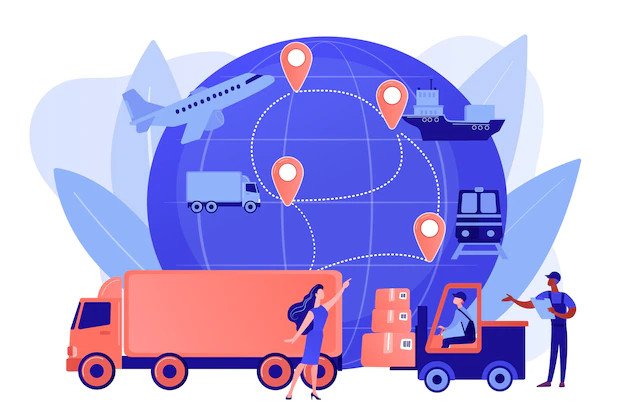
Transportation services have changed dramatically over the last decade. Customers no longer judge companies purely on whether a package, vehicle, or shipment arrives at its destination. Today, the entire experience surrounding the service matters just as much as the outcome itself.
People expect speed, transparency, convenience, and communication throughout every stage of the process. Whether arranging freight deliveries, vehicle transportation, relocation logistics, or last-mile shipping, customers increasingly compare transportation experiences against the seamless digital standards set by ecommerce, banking, and entertainment platforms.
As expectations continue rising, here’s why user experience is becoming one of the most important competitive factors across the transportation industry.
Consumers Expect More Than Basic Delivery
Transportation services were once viewed primarily as operational necessities. As long as the delivery was completed, many customers accepted limited communication and slow processes as normal.
That mindset has changed significantly.
Modern consumers now expect transportation experiences to feel smooth, responsive, and highly visible from beginning to end. Industry analysts note that customer expectations around speed, transparency, and reliability continue reshaping logistics priorities across the sector.
Customers increasingly want:
- Real-time updates
- Transparent pricing
- Flexible scheduling
- Mobile-friendly booking systems
- Faster communication
- Self-service tools
- Simplified tracking experiences
Transportation companies that fail to provide these experiences often struggle to retain customers in increasingly competitive markets.
Transparency Has Become a Core Expectation
One of the biggest frustrations customers face in transportation services is uncertainty.
People want to know where their shipment, vehicle, or delivery stands at every stage of the process. Real-time tracking and proactive communication are no longer viewed as premium features. They are increasingly seen as standard expectations.
Research into logistics transformation highlights how technologies such as IoT tracking, predictive analytics, and integrated digital systems are improving visibility across transportation networks.
When customers receive consistent updates and clear communication, they are more likely to trust the provider even if delays or disruptions occur.
The experience of being informed often matters just as much as the speed of the service itself.
Digital Simplicity Is Influencing Customer Decisions
Consumers now interact with transportation services through digital platforms far more frequently than before. Booking systems, quotes, payment processes, customer support, and tracking tools are increasingly expected to work smoothly across desktop and mobile devices.
User experience design has become particularly important in logistics and transportation because complicated systems create immediate friction for customers. Industry research shows that companies focusing on customer experience design often improve customer satisfaction, loyalty, and operational efficiency simultaneously.
Transportation providers are simplifying interfaces, reducing booking complexity, and streamlining communication in order to meet these expectations.
Businesses are recognizing that customers may choose providers based not only on cost, but also on how easy the process feels overall.
Vehicle Transportation Is Becoming More Customer-Centric
Vehicle transportation services are also adapting to changing expectations around convenience and transparency.
Customers relocating, purchasing vehicles remotely, or moving for work increasingly want transportation experiences that feel predictable and manageable rather than stressful. Services that help customers transport your car Milwaukee and other major cities are part of a broader industry shift toward easier digital coordination and more flexible transport options.
This reflects a wider movement within transportation services toward user-focused experiences rather than purely operational delivery models.
Communication Quality Shapes Customer Trust
One of the most overlooked aspects of transportation user experience is communication.
Research into logistics customer experience highlights that communication gaps between teams and customers remain one of the biggest frustrations within the industry.
Customers increasingly expect:
- Fast responses to questions
- Proactive updates about delays
- Clear delivery timelines
- Easy access to support
- Consistent information across channels
Transportation providers that communicate clearly during problems often maintain stronger customer trust than companies that remain silent until issues escalate.
Good communication reduces uncertainty, and uncertainty is often what creates the most frustration for customers.
Customer Experience Is Becoming a Long-Term Competitive Advantage
Transportation services are increasingly operating in a customer-first environment where convenience, trust, and usability strongly influence loyalty.
Research shows that businesses delivering strong customer experiences often improve retention, satisfaction, and long-term profitability.
As transportation networks become more digitized and customer expectations continue evolving, user experience will likely become even more central to industry success.
The companies leading the future of transportation may not simply be the fastest or cheapest. They may be the ones creating experiences that feel the most transparent, reliable, and effortless for customers from beginning to end.