
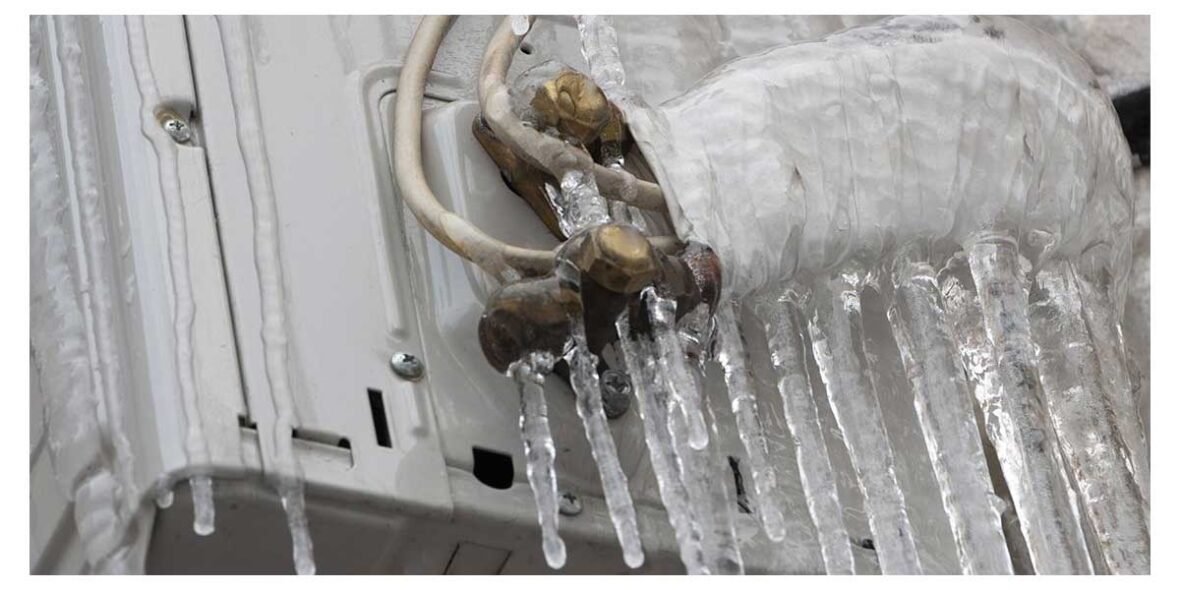
If your AC unit is freezing up in the winter, the first question is whether you are looking at a heat pump in heating mode, an air conditioner being run for cooling, or ice on the indoor evaporator coil. Those are different problems, and treating them the same way can waste time or make the system harder to diagnose.
The short answer to why is my ac unit freezing up in the winter? is usually one of four things: normal heat pump frost, a failed defrost cycle, restricted airflow, or cooling equipment being asked to run in weather it was not designed for. Heavy ice, weak airflow, repeated freeze-ups, or a system that will not heat or cool normally needs a technician.
Quick Answer: Light Frost Can Be Normal, Heavy Ice Is Not
A thin frost layer on a heat pump’s outdoor coil can be normal in winter. A thick shell of ice, an outdoor fan locked in ice, indoor coils freezing, or ice that returns after thawing points to a fault such as airflow restriction, refrigerant charge problems, a bad defrost control, or low-ambient cooling without the right controls.
Here is the practical split. If the outdoor unit is a heat pump and it is heating your home, some frost may appear before the system defrosts itself. If a standard AC is running in cooling mode when it is cold outside, the evaporator coil can get too cold and freeze fast.
| What is freezing? | Most likely meaning | What to do first |
|---|---|---|
| Light frost on outdoor heat pump coil | Often normal before a defrost cycle | Watch for defrost, water runoff, and normal heating afterward |
| Outdoor unit covered in thick ice | Defrost cycle failure, sensor issue, fan problem, or drainage ice buildup | Switch to emergency or backup heat if available and call HVAC service |
| Indoor evaporator coil is a block of ice | Low airflow, dirty coil, low refrigerant, or cooling in low outdoor temperature | Turn cooling off, run fan only if safe, thaw fully before diagnosis |
| Ice returns soon after thawing | The root cause was not fixed | Stop running cooling and schedule a technician |
| AC runs in winter for a server room, sunroom, or apartment | Low ambient operation may need special controls | Check whether the system is rated for cold-weather cooling |
When Winter Frost on a Heat Pump Is Normal
Heat pumps can collect frost outdoors because the outdoor coil is absorbing heat from cold outside air. The U.S. Department of Energy explains that an air-source heat pump uses a reversing valve for both cooling and the winter defrost cycle, which lets the system temporarily reverse operation to melt frost from the outdoor coil.
That defrost period can look strange if you have never watched it. Steam may rise from the outdoor unit, the fan may stop, water may run off the base, and the system may sound different for a few minutes.
Normal frost is usually thin and temporary. It should clear during defrost, and the home should keep heating normally afterward. Not always. If the outdoor coil turns into a white block and stays that way, the system is not simply “doing winter.”
Cold-climate heat pump testing has become much more serious in recent years. ENERGY STAR notes that certified cold-climate air-source heat pumps are tested for performance down to 5 F, but the equipment still needs proper sizing, installation, drainage, and backup heat planning in colder weather.
Why Ice Gets Worse Instead of Melting Off
Ice builds when the coil temperature stays below freezing while moisture keeps landing on it. Once ice starts blocking airflow through the coil, heat transfer drops, the coil gets colder, and the freeze-up can feed on itself.
The most common chain is boring but real: a dirty filter, blocked return, dirty coil, or slow blower reduces airflow. The coil can no longer pick up enough heat from the air passing over it, so moisture freezes instead of draining away.
Low refrigerant can cause a similar symptom, but it is not a homeowner adjustment. Refrigerant does not get “used up” like fuel. If the charge is low, there is usually a leak or a previous service issue, and a licensed technician needs to find the cause.
– r/hvacadvice, August 2025
That is the part many homeowners miss: melting the ice is the beginning of diagnosis, not the repair. A frozen coil hides the real readings a technician needs.
Running AC in Cold Weather Can Freeze the Indoor Coil
A standard central air conditioner is usually not meant to cool the house when the outdoor temperature is low. Without low-ambient controls, cold outdoor air can drop system pressures and coil temperatures enough to freeze the indoor evaporator coil.
This shows up in apartments, home offices with lots of equipment, finished attics, sunrooms, and houses where someone wants cooling during a mild winter day. The thermostat calls for cooling, the outdoor unit starts, and the indoor coil slowly turns into a cold, wet slab.
Honestly, this is one of those cases where the word “AC” creates confusion. A heat pump is allowed to work in winter because it is built to move heat both ways. A cooling-only AC may need a low-ambient kit, fan cycling control, or a different comfort strategy if it must cool during cold weather.
Safe Steps to Take Before Calling for Service
Do not chip ice off the coil, pour hot water into electrical areas, or keep restarting the system to see if it gets better. The safer move is to stop the condition that is making ice and give the system enough time to thaw.
- Turn the thermostat from Cool to Off if the indoor coil is frozen.
- Set the fan to On only if the blower is working and no electrical issue is suspected.
- Replace a dirty filter with the correct size and type.
- Open supply vents and clear return grilles.
- Check that the outdoor unit is not buried in snow, leaves, or ice.
- Let the system thaw completely before restarting or before a technician takes readings.
- Call for service if ice returns, airflow stays weak, or the heat pump cannot clear outdoor frost.
Expect thawing to take hours, not minutes. The annoying part is that the outside of the coil can look better while ice is still packed deeper inside the cabinet.
The Department of Energy’s air conditioner maintenance guidance says dirty, clogged filters reduce airflow and efficiency, and that dirt on the evaporator coil reduces heat absorption. It also advises keeping the outdoor condenser area clear and having professionals check refrigerant charge, leaks, airflow, controls, and thermostat accuracy when the system is not cooling adequately.
Signs the Defrost Cycle Is Failing
A heat pump defrost problem usually shows up as outdoor ice that does not clear, heat output that drops, or a unit that seems trapped in a frosty state. The cause may be a defrost board, sensor, reversing valve, outdoor fan issue, low refrigerant, or installation detail that leaves meltwater refreezing around the base.
Look for patterns. Does the outdoor coil frost lightly and then clear? That is often fine. Does the ice grow across the coil, fan grille, and cabinet until airflow is blocked? That is service territory.
Also check the ground or pad. Winter defrost creates water. If the unit sits low, drains poorly, or is surrounded by frozen runoff, water can refreeze around the base and make the next cycle worse.
Where DIY Checks Stop
Homeowners can safely handle airflow, filters, vents, returns, snow clearance, and basic thermostat mode checks. Refrigerant, electrical controls, pressure readings, reversing valves, and defrost controls belong to a trained HVAC technician because a frozen system can give misleading symptoms.
| Check | Homeowner safe? | Why it matters |
|---|---|---|
| Replace dirty filter | Yes | Restores airflow across the indoor coil |
| Open blocked vents and returns | Yes | Reduces airflow restriction and pressure issues |
| Clear snow and debris around outdoor unit | Yes, gently | Allows air movement and drainage |
| Check defrost board or sensor | No | Requires electrical testing and correct diagnosis |
| Add refrigerant | No | Low charge usually means a leak or measured system fault |
| Test reversing valve | No | Needs gauges, temperature readings, and electrical checks |
If the system freezes once after a neglected filter, replacing the filter and thawing may be enough. If it freezes again, the system is asking for a real diagnosis.
The Habits That Keep Ice From Coming Back
Prevention comes down to airflow, correct operation, clean coils, and equipment that matches how the space is used. A home that needs winter cooling for equipment heat may need different controls than a home using a heat pump for normal winter heating.
- Check filters monthly during heavy use and replace them when they load up.
- Keep return grilles clear, especially after moving furniture.
- Keep at least about two feet of clearance around the outdoor unit where possible.
- Do not cover a heat pump outdoor unit in winter unless the manufacturer specifically allows it.
- Schedule heat pump maintenance at least once a year.
- Ask whether low-ambient cooling controls are needed if the AC must run in cold weather.
- Have recurring ice, weak airflow, or refrigerant concerns diagnosed before compressor damage becomes the next problem.
One small detail: after a winter storm, look at the unit from the side, not just from the window. Snow can drift against the coil face while the top still looks clear.
FAQ
Is it normal for an AC unit to freeze in winter?
Light frost on a heat pump outdoor coil can be normal, but a cooling-only AC or indoor evaporator coil freezing in winter is usually a problem. Heavy ice, repeated ice, or weak airflow should be checked.
Should I turn off my AC if it is frozen?
Yes, turn cooling off when the indoor coil is frozen. Running cooling against an iced coil can worsen the freeze-up and may make compressor stress more likely.
Can a dirty filter freeze an AC unit in winter?
Yes, a dirty filter can restrict airflow enough for the evaporator coil to get too cold and freeze. Replace the filter, thaw the system fully, and watch whether normal airflow returns.
Why does my heat pump freeze outside?
A heat pump outdoor coil can frost because it is pulling heat from cold, moist air. The system should periodically defrost itself; thick ice that does not clear suggests a defrost or performance problem.
Can I pour hot water on a frozen AC unit?
Do not pour hot water into electrical sections or onto delicate coil parts. Turn the system off, let it thaw safely, and use service if ice is heavy or keeps returning.
The Practical Rule
A little winter frost on a heat pump can be part of normal operation. A frozen indoor coil, a block of outdoor ice, or a system that freezes again after thawing is not a weather quirk.
Start with airflow, filters, blocked returns, outdoor clearance, and thermostat mode. Then stop. Refrigerant levels, defrost controls, reversing valves, and low-ambient operation need tools and judgment, and guessing at them usually makes the repair more expensive.