
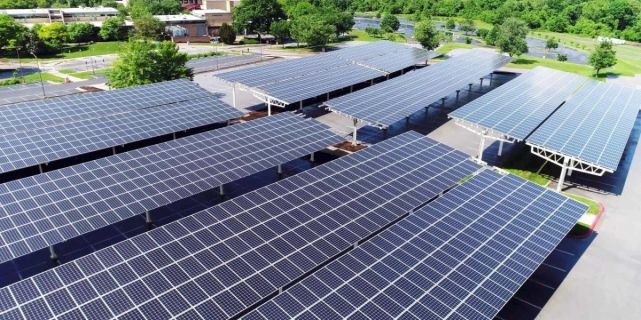
Commercial solar is a fundamentally different calculation than residential solar. The cost per watt is 30 to 40 percent lower. The tax benefits are larger and more flexible. And the decision is made by a spreadsheet, not by a homeowner weighing environmental benefits against a long payback.
For most commercial properties with suitable roof space and high daytime electricity usage, commercial solar generates a 10 to 20 percent internal rate of return and pays for itself in 4 to 7 years. Over the 25-year life of the system, net savings of $50,000 to $500,000 or more are typical depending on system size. Here is the math.
What Commercial Solar Panels Cost
Commercial solar systems cost $1.50 to $2.50 per watt installed before incentives, compared to $2.70 to $3.30 for residential. The lower cost comes from economies of scale. A 100-kilowatt commercial system costs $150,000 to $250,000. The same dollars buy roughly three times as much solar capacity as a residential system.
Commercial systems typically start at 25 kilowatts for small businesses and range up to 500 kilowatts or more for large warehouses, manufacturing facilities, and retail centers. A 50-kilowatt system covering a small office or retail building costs $75,000 to $125,000. A 250-kilowatt system covering a warehouse or light industrial building costs $375,000 to $625,000.
Tax Benefits: Where Commercial Solar Pulls Ahead
Commercial solar owners receive the same 30 percent federal investment tax credit as residential owners, but they also receive depreciation benefits that residential owners do not. Under the Modified Accelerated Cost Recovery System, commercial solar systems are depreciated over five years. The Tax Cuts and Jobs Act allows 100 percent bonus depreciation for solar equipment placed in service through 2027, which means the entire system cost can be depreciated in the first year.
The combined effect of the 30 percent tax credit and five-year accelerated depreciation can offset 50 to 60 percent of the total system cost through tax savings alone. The exact percentage depends on the business’s tax rate and whether bonus depreciation applies in the year of installation. Bonus depreciation is scheduled to phase down beginning in 2027, reaching zero by 2032 unless Congress extends it. The timing of installation matters significantly for the total tax benefit.
A $200,000 commercial solar system with the 30 percent credit and full bonus depreciation reduces the effective net cost to approximately $90,000 to $110,000 after all tax benefits are realized. This is the number that drives the business case.
Electricity Savings and Payback Period
Commercial electricity rates are typically lower than residential rates, averaging 8 to 12 cents per kilowatt-hour nationally. However, commercial properties use electricity during the day when solar is producing, which means a higher percentage of solar generation is self-consumed rather than exported to the grid at lower credit rates.
A 100-kilowatt commercial system generates approximately 130,000 to 150,000 kilowatt-hours per year in a typical U.S. location. At a commercial rate of 10 cents per kilowatt-hour, the annual savings are $13,000 to $15,000. Against a net cost of $90,000 to $110,000 after tax benefits, the simple payback period is 6 to 8 years. With higher electricity rates in states like California, New York, and Massachusetts, where commercial rates can exceed 15 to 20 cents, the payback period drops to 3 to 5 years.
After payback, the system generates pure savings for the remaining 17 to 19 years of its warrantied life, plus additional years of reduced output beyond the warranty. The total net savings over 25 years for a 100-kilowatt system range from $150,000 to $300,000 depending on location and electricity rates.
How Businesses Pay for Solar
Cash purchase produces the highest long-term return because the business captures the full tax benefits and all electricity savings. The cash outlay is recovered through tax savings in year one and electricity savings over the following years.
A solar loan allows the business to install with no money down and pay over 5 to 15 years. The monthly loan payment is typically less than the electricity savings, making the system cash-flow positive from the first month. The business still claims the tax benefits because it owns the system.
A power purchase agreement, or PPA, means a third-party developer installs, owns, and maintains the system on the business’s roof. The business buys the electricity at a fixed rate that is lower than the utility rate, typically 20 to 30 percent below retail. The developer claims the tax benefits. The business has no upfront cost, no maintenance responsibility, and immediate savings. The trade-off is that the business does not capture the full value of the system after payback. The PPA term is typically 15 to 25 years.
A PPA is the most common financing structure for commercial solar because it aligns incentives. The business wants lower electricity costs with no hassle. The developer wants to maximize system production to maximize revenue. The arrangement works for both parties. For businesses that can use the tax benefits and have the capital or financing capacity, ownership produces higher total savings. For businesses that cannot use the tax benefits or prefer to preserve capital for core operations, a PPA is the better choice.
What Makes a Commercial Roof Suitable
A commercial roof needs to be large, structurally sound, and unshaded. The roof should have at least 2,500 square feet of usable space for a 25-kilowatt system and 10,000 square feet for a 100-kilowatt system. A structural engineer must confirm the roof can support the added weight of the panels and racking, which is approximately 3 to 5 pounds per square foot. Most commercial flat roofs can support this without reinforcement.
The roof should have at least 10 years of remaining life. Installing solar on a roof that needs replacement within a few years creates a costly removal and reinstallation mid-life. A roof replacement before solar installation costs $3 to $6 per square foot for a commercial flat roof. This is a significant capital expense that should be planned for.
The business must own the building or have a long-term lease with the property owner’s approval for solar installation. A tenant with a five-year lease and no renewal option should not install solar on the landlord’s building. The payback period exceeds the lease term.
When Commercial Solar Is Not Worth It
Low daytime electricity usage. A warehouse with LED lighting and no HVAC uses less electricity than the solar system would generate. The excess is exported to the grid at net metering rates that may not justify the investment.
Short remaining lease or planned relocation. The system takes 4 to 7 years to pay back. If the business plans to move before then, the investment is not recovered. A PPA can transfer to a new tenant, but ownership cannot.
Heavy roof shading. Adjacent buildings, rooftop HVAC equipment, and mechanical screens cast shadows that reduce production. A solar assessment with shading analysis determines whether the roof receives enough sun.
Structural issues. An older building with a roof near the end of its structural life may require expensive reinforcement to support solar panels. The reinforcement cost can push the payback period beyond the acceptable range.
Frequently Asked Questions
Can I lease my roof to a solar company?
Yes. This is a roof lease or site lease arrangement. A solar developer pays you a fixed monthly or annual rent for the right to install panels on your roof and sell the electricity to the grid or to a third party. Roof leases typically pay $0.05 to $0.15 per square foot per year. A 10,000-square-foot roof generates $500 to $1,500 per year in passive income. The developer handles all costs, maintenance, and insurance. The business receives rent and uses no electricity from the system. This is the right option for property owners with large roofs and low on-site electricity usage.
What happens to the tax benefits if I sell the business?
If you sell the building before the end of the five-year depreciation period, the depreciation is recaptured as ordinary income in the year of sale. This is a tax consequence your accountant should model before the sale. The 30 percent investment tax credit is subject to recapture on a declining scale if the system is removed from service within five years. After five years, both the depreciation and the tax credit are fully vested. If you plan to sell the building within five years, the recapture reduces the net benefit and should be factored into the investment decision.