
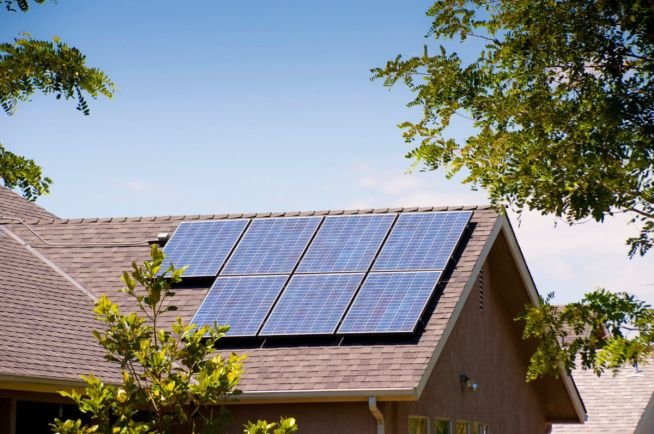
Wisconsin solar costs $2.90 to $3.30 per watt installed, which is in line with the national average. A 7-kilowatt residential system costs $20,000 to $23,000 before incentives and $14,000 to $16,000 after the federal tax credit. The Focus on Energy rebate program reduces the net cost further, and full retail net metering is available through the state’s investor-owned utilities.
The cold winters reduce production from November through February, but Wisconsin’s above-average electricity rates and strong net metering policy keep the economics competitive. Here is the full cost breakdown.
Installed System Cost by Size
| System Size | Installed Cost (Before Incentives) | After Federal Tax Credit | After All Incentives |
| 5 kW | $14,500–$16,500 | $10,200–$11,600 | $9,200–$10,600 |
| 7 kW | $20,300–$23,100 | $14,200–$16,200 | $12,700–$14,700 |
| 10 kW | $29,000–$33,000 | $20,300–$23,100 | $18,300–$21,100 |
Wisconsin labor costs are moderate, but the installer market is less competitive than in neighboring Illinois and Minnesota, which keeps prices from dropping as low as the cheapest states. The Madison and Milwaukee metros have the most installer options and the most competitive pricing. Rural areas, particularly in northern Wisconsin, see higher costs due to fewer installers and longer travel distances.
Wisconsin Solar Incentives
The federal solar investment tax credit covers 30 percent of the total system cost. On a $21,500 system, the credit is $6,450. This is a direct credit against federal taxes owed, not a deduction. Unused credit carries forward to future tax years.
Focus on Energy, Wisconsin’s statewide energy efficiency and renewable energy program, offers a cash rebate for residential solar installations. The rebate is $500 per kilowatt for systems up to 6 kilowatts, for a maximum of $3,000. A 7-kilowatt system receives the maximum $3,000, because the per-kilowatt rebate caps at 6 kilowatts regardless of system size. The rebate is a direct payment, not a tax credit. Your installer typically applies the rebate as a discount on the installation cost rather than requiring you to file separately and wait for reimbursement.
Focus on Energy is funded through a charge on utility bills and is available to customers of participating utilities, which include most investor-owned utilities in the state. Some municipal utilities and rural electric cooperatives do not participate. Confirm your utility’s Focus on Energy participation status before budgeting for the rebate.
Wisconsin offers a property tax exemption for solar systems. The added value is excluded from property tax assessment. In Dane County and Milwaukee County, where property taxes are higher than the state average, this exemption is worth approximately $200 to $400 per year.
Wisconsin does not offer a state-level solar tax credit. The Focus on Energy rebate is the primary state-level financial incentive.
Net Metering in Wisconsin: Strong and Stable
Wisconsin’s net metering policy is among the more stable and favorable in the Midwest. Investor-owned utilities, including We Energies, Alliant Energy, Wisconsin Public Service, and Xcel Energy, are required to offer full retail rate net metering for systems up to 20 kilowatts. Excess generation is credited at the full retail rate and rolled over month to month indefinitely. Unlike states with annual true-up provisions that pay out credits at a lower avoided cost rate, Wisconsin allows credits to roll over continuously.
This continuous rollover is a significant advantage. Summer overproduction is credited at the full retail rate and can be used to offset winter underproduction without losing value at an annual reset. For a state with high seasonal variation in solar output, this policy feature meaningfully improves the economics.
Municipal utilities and rural electric cooperatives are not subject to the statewide net metering requirement. Each sets its own policy. Some offer net metering comparable to the investor-owned utilities. Others offer lower export rates or no net metering at all. Contact your utility directly before getting solar quotes.
How Much Power Wisconsin Solar Panels Generate
Wisconsin receives 4.0 to 4.5 peak sun hours per day averaged across the year. Southern Wisconsin, including Madison and Milwaukee, receives approximately 4.3 hours. Northern Wisconsin receives approximately 4.0 hours. This is comparable to Minnesota and slightly less than Iowa and Illinois.
A 7-kilowatt system in southern Wisconsin generates approximately 9,000 to 10,000 kilowatt-hours per year. Summer production from May through August is strong, with June and July generating 20 to 25 percent of the annual total. Winter production from November through February drops to 25 to 35 percent of summer levels. The annual production estimate accounts for this seasonal variation, including snow cover.
The same cold-temperature efficiency advantage that applies in Minnesota applies in Wisconsin. Panels at 20 degrees produce 5 to 10 percent more power from the same sunlight than panels at 100 degrees. Spring and fall production benefits from cool temperatures and moderate daylight hours.
How Much You Save on Electricity
Wisconsin residential electricity rates average 14 to 15 cents per kilowatt-hour, which is at or slightly above the national average. We Energies, which serves the Milwaukee area and southeastern Wisconsin, has rates toward the higher end of this range. Higher rates make each kilowatt-hour of solar generation more valuable.
A 7-kilowatt system generating 9,500 kilowatt-hours per year at 14.5 cents saves approximately $1,380 per year in electricity. The continuous net metering rollover means you capture the full retail value of every kilowatt-hour your system generates, whether it is consumed immediately or exported and used later as a credit.
Against a net system cost of $13,500 to $14,500 after the federal credit and Focus on Energy rebate, the simple payback period is 9.5 to 10.5 years. This is competitive with neighboring Minnesota when the Solar*Rewards incentive is factored in, and better than Iowa and Missouri where lower electricity rates extend the payback.
25-Year Financial Picture
Over 25 years, a Wisconsin homeowner with a 7-kilowatt system can expect net savings of $14,000 to $22,000 after recovering the initial investment. Electricity rates are assumed to increase at 2 to 3 percent annually. The inverter replacement at year 12 to 15, costing $1,500 to $2,500, is factored into these numbers.
For homeowners served by municipal utilities or cooperatives without full retail net metering, the savings are at the lower end of the range or potentially below breakeven. The net metering policy is the single largest variable for Wisconsin solar economics after the utility type.
Cash vs. Loan vs. Lease
Cash purchase produces the highest return. A solar loan allows zero-down installation with monthly payments over 10 to 25 years. Wisconsin-based credit unions, including Summit Credit Union in the Madison area and Landmark Credit Union in the Milwaukee area, have historically offered solar-specific loans at rates of 4 to 7 percent. The monthly loan payment is typically lower than the pre-solar electric bill.
A lease places a third-party-owned system on your roof. The third party keeps the federal tax credit and the Focus on Energy rebate. Given the value of these incentives, leasing is rarely the best option for Wisconsin homeowners who can use the federal tax credit. Ownership through cash or a loan captures significantly more lifetime value.
When Solar Is Not Worth It in Wisconsin
Heavy tree cover. Wisconsin’s dense hardwood forests and urban tree canopies shade many roofs. A shaded roof may not produce enough to justify the investment.
North-facing roof. At Wisconsin’s latitude, a north-facing roof produces 40 to 50 percent less than a south-facing roof.
Cooperative or municipal utility without net metering. This is the largest risk factor. Confirm your utility’s policy before proceeding.
Moving within seven years. With a payback of 9.5 to 10.5 years, you need to stay in the home to reach breakeven.
Old roof. Wisconsin’s freeze-thaw cycles, ice dams, and snow loads accelerate roof wear. Replace a roof with less than 10 years remaining before installing solar.
Frequently Asked Questions
How do I get the Focus on Energy rebate?
Your solar installer handles the application. The installer submits the project details to Focus on Energy before installation to reserve the rebate. After installation and inspection, the rebate is disbursed. Most Wisconsin installers apply the rebate as an upfront discount on the final invoice rather than making you wait for reimbursement. Confirm with your installer that they participate in the Focus on Energy program and that the rebate amount in your quote reflects the current program terms.
Does We Energies offer net metering?
Yes. We Energies offers full retail rate net metering for systems up to 20 kilowatts. Excess generation credits roll over month to month and do not expire annually. We Energies has not proposed major changes to its net metering policy in recent rate cases, unlike utilities in some neighboring states. The policy has been stable, which is an advantage for Wisconsin solar owners.
Does solar work in a Wisconsin winter?
Yes, at reduced output. December and January production is 25 to 35 percent of June levels due to short days, low sun angle, cloud cover, and snow. The annual production estimate provided by your installer accounts for this. The net metering credits you accumulate during the high-production months from May through August offset the winter deficit. Your winter electric bills will be higher than your summer bills, but the annual total electricity cost should match the installer’s projection. Expect seasonal variation in bills. Do not expect zero bills in January.