
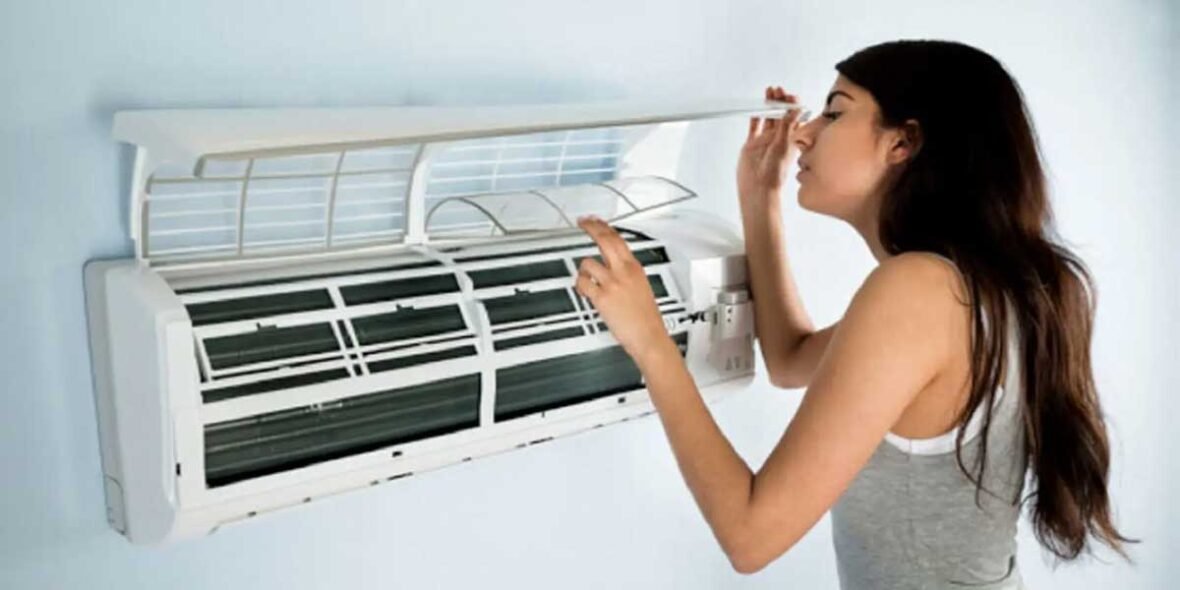
Why is my new ac not cooling? The honest answer is that setup and install errors come first, not a defective unit. Roughly 60 to 70 percent of “new AC not cooling” service tickets get resolved at the thermostat, the filter, the breaker, or the outdoor disconnect, long before any tech opens a refrigerant gauge. The fastest path to a cold house is a five-minute diagnostic, not a panicked service call.
Homeowners do not see what the installer left behind. They see a hot living room and a brand-new outdoor unit sitting there refusing to do its job. The pages below walk through a five-minute test, rank the seven likeliest culprits on a freshly installed system, explain which install mistakes show up in the first 72 hours, and lay out the warranty playbook so you know who pays for what.
First, run this 5-minute diagnostic
Five quick checks separate a settings problem from a hardware problem, and one number tells you whether the system is actually moving heat. Do these in order before you call anyone. The whole sequence takes about as long as it takes for a kettle to boil twice.
- Thermostat: set to Cool, fan on Auto, setpoint at least 5 to 6 degrees below current room temperature.
- Air filter: pull it out. On a new install, look specifically for drywall dust, packaging plastic, or a thin protective film a contractor forgot to remove.
- Vents and registers: every supply vent open, every return grille clear of furniture, rugs, or curtains.
- Outdoor unit: the top fan should be spinning, with 18 to 24 inches of clearance on all sides and no leaves, plastic wrap, or yard debris against the coil.
- Delta-T test: tape an ordinary kitchen thermometer to a supply vent and a return grille. After 15 minutes of run time, the supply should read 16 to 22 degrees Fahrenheit colder than the return. That is the ASHRAE guideline for a properly performing residential split system.
If the delta-T comes back under 14 degrees, the problem is either airflow or refrigerant, and you need the installer. If a breaker is tripped or the outdoor disconnect is in the off position, reset it once, wait 60 seconds, and try again. If it trips a second time, stop and call. Either way, fifteen quiet minutes with a coffee in hand will give you a clearer verdict than any phone call could.
The 7 most likely causes when a new AC won’t cool
The question why is my new ac not cooling? has an order of operations. Settings first, airflow second, hardware last. Settings and airflow problems show up far more often than refrigerant defects, and the cheapest-to-fix causes sit at the top of the list. Work down the table. Do not jump to “refrigerant leak” until you have eliminated everything above it.
| Rank | Cause | Typical symptom on a new install | Quick fix or next step |
|---|---|---|---|
| 1 | Thermostat set wrong | System idle, fan blows room-temperature air, display shows Heat or Off | Switch to Cool / Auto, drop setpoint 5 to 6 degrees below room |
| 2 | Filter clogged by construction dust | Weak airflow at vents, system runs but house stays warm | Replace the filter; check again in 30 days, often again at 60 |
| 3 | Tripped breaker or outdoor disconnect off | Indoor fan runs, outdoor unit silent, no cold air after long wait | Reset breaker once; confirm outdoor disconnect lever is fully on |
| 4 | Supply or return register blocked | One or two rooms warm while others cool, system runs constantly | Open every supply, clear furniture from returns, recheck in 30 minutes |
| 5 | Frozen evaporator coil | Ice on the indoor coil cabinet or the large copper line, water pooling under air handler | Shut off; set fan to On; thaw 12 to 24 hours; call installer |
| 6 | Low refrigerant from install leak | Hissing near copper lines, oily residue on joints, delta-T under 12 degrees | Call the installer; do not let anyone else recharge the system |
| 7 | Unit sized wrong for the home | Runs all day without reaching setpoint, or short-cycles and leaves the air clammy | Request the installer’s Manual J calculation; renegotiate if it is missing |
Items 1 through 4 you can usually solve yourself in under an hour. Items 5 through 7 belong to the installer, and on a system this new the labor is almost certainly on their dime. The most expensive box in your basement, defeated by a four-dollar air filter, is more common than any homeowner wants to believe.
Installation mistakes that show up on day one
Three install errors account for most call-backs in the first 72 hours: an undercharged refrigerant line, leaky duct connections, and an oversized unit that short-cycles. Each leaves a recognizable signature, and each is fully covered under a labor warranty as long as the original contractor is the one fixing it.
Refrigerant charge done wrong
Refrigerant does not get used up the way gasoline does. If a brand-new system is low on charge, the refrigerant is leaking somewhere, almost always at a connection the installer made. The usual suspects are a loose flare nut at the indoor coil, a missing Schrader valve cap on the service port, or a brazed joint that wept while it cooled.
Listen near the copper lines for a faint hissing or bubbling. Look for oily residue on the joints, since refrigerant carries a trace of compressor oil that flags every leak. If either sign shows up on a unit installed this week, do not touch it and do not let a third-party tech recharge it. The original installer needs to own the diagnosis or you risk voiding the manufacturer parts warranty.
Duct leaks and disconnected boots
Old homes plus new equipment is the classic mismatch. The new air handler can deliver every BTU it promises, but if the existing trunk line in the attic has a separated boot or a torn flex collar, half that cooled air is conditioning the rafters instead of the bedroom.
An easy DIY check: walk down to the basement or crawl space while the system is running, and hand-feel the supply trunk. Cold metal at the start of the run, room-temperature metal a few feet later, and you have located a leak. Re-taping with foil tape (not cloth duct tape, which fails inside a year) is something the installer should handle as part of commissioning a new system.
Oversized or undersized, and why bigger is not safer
An undersized AC runs constantly without ever hitting the setpoint, and your electric bill in month one will tell you everything you need to know. An oversized AC cools the air fast, satisfies the thermostat, and shuts off before it can pull humidity, so the house feels cold and clammy at the same time, with indoor relative humidity climbing past 55 percent.
The honest way to size a system is ACCA Manual J, a load calculation that accounts for square footage, insulation, window count, orientation, and climate. No installer brags about a Manual J because it is slow, unbillable, and easy to skip. That is exactly why so many homes end up with the wrong-sized box, and the homeowner finds out only when the first heat wave arrives.
When the thermostat is the real problem
Smart thermostats installed alongside a new AC often miss a C-wire, which means the unit cycles oddly or fails to call for cool at all. A new install is the most common place for this to surface, because the contractor reuses old low-voltage wiring that never had a C-wire in the first place.
Other common day-one thermostat issues:
- Heat mode left on after a spring changeover. A Honeywell or Ecobee that was last in heat mode will not respond to a cool call until you toggle it.
- Dead batteries on a battery-powered display. A blank or flickering screen means the system never gets the cool command.
- Heat pump wired backwards. On heat pump installs, the reversing valve can be miswired so that a cool call triggers heat. If warm air is blowing on a cool setting, this is the first thing to suspect.
- Old mercury-tube unit kept in place. If the installer reused a 1990s mercury thermostat, the calibration drift alone can hold the system off by 2 to 3 degrees.
Frozen coil and refrigerant, what to do before calling
If you see ice on the indoor coil or on the large copper line running to the outdoor unit, shut the system off immediately. Running a frozen AC keeps freezing the coil, can crack the line set, and damages the compressor. Switch the thermostat to Fan Only for 12 to 24 hours so room-temperature air thaws the coil safely.
Why does a one-week-old system ice up? Three common reasons. The contractor left a protective wrap on the indoor coil. Packaging plastic stayed in the air handler cabinet. Or the refrigerant charge was off enough that the coil ran below freezing under partial airflow. Lay towels under the air handler to catch the meltwater. Do not chip at the ice, since the evaporator fins are thin aluminum and bend with almost no force.
This is the moment when real-world frustration shows up online. Here is a verified post from a homeowner whose just-installed unit kept the house warm for two weeks straight:
“Hello everyone. Wondering if you all can give me some input. We moved into a house at the beginning of June, and noticed that our AC wasn’t properly cooling the house. …”
— OP on r/hvacadvice, July 2023 (153 upvotes, 269 comments)
The thread that followed pointed to a familiar culprit: an installer who skipped the static-pressure measurement and oversold a unit too large for the duct system. Twelve hours of meltwater later, the same household had a working AC and a 1,800-dollar warranty repair done at no cost.
Sizing, ductwork, and the “it never reaches 72” problem
A new unit that runs all day without hitting setpoint usually traces to under-sizing or duct losses. Both leave the install company on the hook for a fix, and both are easy to spot once you know the rough BTU-per-square-foot rule.
| Home size | Typical BTU range | Tons | Notes for high-altitude (Denver, 5,280 ft) |
|---|---|---|---|
| 600 sq ft | 12,000 BTU | 1.0 | Derate 5 to 8 percent for altitude |
| 900 sq ft | 18,000 BTU | 1.5 | Same; consider dry-climate sensible-only load |
| 1,200 sq ft | 24,000 BTU | 2.0 | Common Denver bungalow size |
| 1,500 sq ft | 30,000 BTU | 2.5 | Verify ductwork can handle the CFM |
| 1,800 sq ft | 36,000 BTU | 3.0 | Typical two-story home with finished basement |
| 2,400 sq ft | 48,000 BTU | 4.0 | Zone-control often makes more sense than one unit |
| 3,000 sq ft | 60,000 BTU | 5.0 | Manual J essential; rule-of-thumb is unreliable above 4 tons |
These are starting points, not prescriptions. Denver’s dry air shifts the load profile toward sensible cooling rather than dehumidification, which is why some local installers undersize systems that would have been right on the Gulf coast. If your new unit was sized purely from square footage with no load calculation, that is the first conversation to have with the installer.
Your warranty playbook: who to call first
Three layers of coverage protect a new install. Call the installer first, always. The installer’s labor warranty handles workmanship issues and the manufacturer’s parts warranty covers defects, but the order of calls matters because the wrong sequence can void either one.
| Layer | Typical coverage | When and who to call |
|---|---|---|
| Installer labor warranty | 90 days to 2 years on workmanship and refrigerant charge | Call first for any day-one cooling problem; document by photo and date |
| Manufacturer parts warranty | 5 to 10 years on compressor, coils, and motors; sometimes longer with online registration | Installer files the claim on your behalf; verify your unit is registered within 60 to 90 days of install |
| Extended dealer or utility plan | Varies: covers gaps in labor coverage, sometimes maintenance visits included | Used only after layers one and two; check before paying out of pocket |
The hard rule: do not let a second-opinion tech touch the refrigerant before the original installer has had a chance to diagnose the issue. Manufacturer parts warranties in most U.S. jurisdictions are voided the moment a non-original contractor recharges or modifies the system. Working techs in the trade are blunt about this, since they regularly meet homeowners who burned a 10-year compressor warranty by calling the wrong number first.
Frequently asked questions
Should I keep running my new AC if it isn’t cooling?
No. If you are still asking why is my new ac not cooling? after 30 minutes of run time, switch the thermostat to Off or Fan Only and call the installer. Running a malfunctioning new AC can freeze the indoor coil, damage the compressor, and burn electricity for no benefit. Continuing to run the system risks turning a covered workmanship issue into an uncovered consequential damage claim.
How long should a new AC take to cool the house on day one?
A correctly sized system should drop indoor temperature 1 to 2 degrees Fahrenheit per hour at design conditions. Expect the first full cooldown after install to take 4 to 8 hours, longer if outdoor air is above 95 degrees or the house has been baking unconditioned for several days. If 24 hours pass with no progress, treat it as a problem rather than a break-in delay.
Is a problem with a brand-new AC always covered by warranty?
Almost always, yes. Manufacturer parts coverage typically runs 5 to 10 years, and the installer’s labor warranty covers the first 1 to 2 years, provided you used a certified installer and the unit was registered within the manufacturer’s window. Keep the install invoice, the model and serial numbers, and the registration confirmation in one folder.
My new AC was installed yesterday and is already freezing up. Is that normal?
It is not. Freezing on a one-day-old system points to either an airflow restriction (a filter still wrapped in plastic, a vent blocked, protective coil wrap left in place) or an undercharged refrigerant line. Shut the system off, set the fan to On for 12 hours of thaw, and call the installer the same day.
How can I tell if my new AC is the wrong size for my home?
Two tells. An undersized unit runs without stopping yet never hits setpoint, especially on hot afternoons. An oversized unit cools fast but leaves the air clammy with humidity climbing past 55 percent, because it short-cycles before pulling moisture from the air. A Manual J load calculation is the only objective answer; ask to see yours.
Installers do not see the panic. They see a service ticket. So when you call and ask “Why is my new ac not cooling?” the data you bring shapes how fast they triage your house. Day-one cooling problems are nearly always setup, install, or airflow, and almost never a defective unit. Run the five-minute diagnostic, write down the delta-T, and call the installer with data in hand. A new ac unit not cooling on the hottest day of the year is a covered repair, not a crisis, as long as you make the right phone call first.
RankMath SEO Meta (Copy & Paste)
SEO Title: Why Is My New AC Not Cooling? Day-One Fix Guide
Meta Description: Why is my new ac not cooling? Most fresh installs fail at setup, not equipment. Use the 5-minute diagnostic, ranked causes, and warranty playbook.
Focus Keyword: Why is my new ac not cooling?
URL Slug: why-is-my-new-ac-not-cooling