
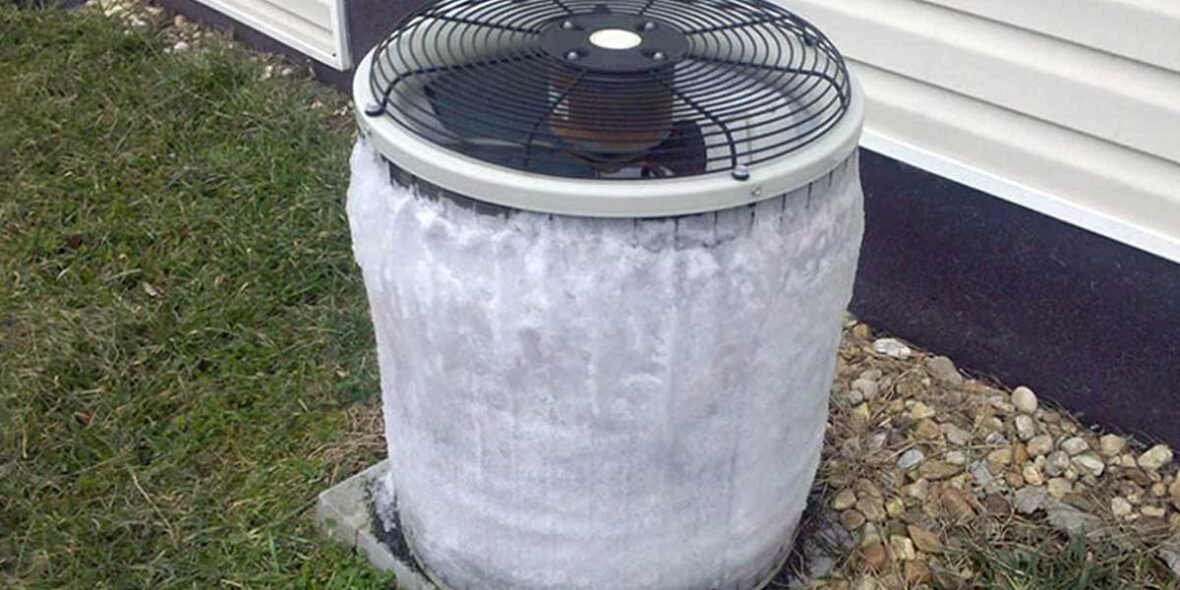
You walked to the vent, expected a 70-degree breeze, and got room-temperature air. Then you found the giveaway: a copper line at the outdoor unit wearing a thin sleeve of frost, or a sheet of ice along the indoor coil. A central AC has no business making ice in July, and yet a frozen evaporator is one of the most common summer service calls in the trade. If you’ve been asking yourself why is my central AC freezing up, the answer is almost never random. The fix is rarely complicated, but the order of operations matters a lot.
Homeowners rarely call a tech because the AC stopped working. They call because the vents feel wrong and the bill keeps climbing. The freeze is invisible until you go looking for it. By the time the symptom is unmistakable, the compressor has often been running hot for hours.
The Quick Answer: What a Frozen AC Actually Means
A frozen central AC means the evaporator coil dropped below 32°F and the humidity in your indoor air is now glued to it as solid ice. Almost every case traces to one of five problems: clogged airflow, low refrigerant, dirty coils, a duct or drain fault, or running the system when it’s too cold outside.
The single most important thing to do first is switch the thermostat to OFF and the fan to ON. Leaving the compressor running while iced is what turns a 20-dollar filter problem into a 2,000-dollar compressor replacement. The fan alone keeps warm room air moving across the frozen coil and shortens the thaw from a full day to a few hours.
How to Tell If Your AC Is Actually Frozen
Look in two places. At the outdoor condenser, check the larger of the two copper lines (the suction line) where it enters the cabinet. If you see frost, dripping condensation in 90-degree weather, or visible ice, that’s a freeze in progress. Indoors, pop the front panel of the air handler. Ice on the A-shaped evaporator coil, water pooling in the drain pan, or unusually warm supply air with the system “running” all point to the same diagnosis.
Indoor freeze and outdoor freeze are not the same thing, and homeowners on r/hvacadvice ask about this constantly. An indoor evaporator freeze is usually airflow or refrigerant. An outdoor suction-line freeze almost always means low refrigerant charge or a stuck metering device. Knowing which one you have changes who you call.
| What you see | Most likely cause | First step | Pro needed? |
|---|---|---|---|
| Frost on outdoor copper line | Low refrigerant or leak | Shut off; do not run again | Yes (EPA-certified tech) |
| Ice on indoor coil + dirty filter | Restricted airflow | Replace filter, thaw, restart | Often DIY |
| Vents blowing warm, no visible ice | Early-stage freeze or thermostat issue | Check filter and registers | Probably DIY |
| Water pooling, no obvious ice | Clogged condensate drain | Clear drain line | DIY or pro |
| Freezes at night, fine by day | Outdoor temp dropping below 62°F | Raise setpoint or shut off overnight | No |
That table is the diagnostic shortcut that most freeze-up articles skip. A 95-degree afternoon with vents pushing lukewarm air feels surreal until you connect it to what’s happening physically: the coil is so cold it has stopped doing its job, and every minute the compressor keeps running, the damage clock is ticking.
The Five Root Causes Behind a Frozen Central AC
Five problems account for almost every frozen central AC, and they show up in a roughly predictable order of frequency. A clogged filter is by far the most common; refrigerant issues are second; coil dirt, blower or duct trouble, and ambient or drain problems fill out the list. Diagnose in that order and you’ll save yourself a service call most of the time.
1. Clogged Air Filter or Blocked Returns (Most Common, Usually DIY)
Refrigeration depends on a steady volume of warm room air sweeping across the evaporator coil. When the filter is plugged with dust or a return grille is hidden behind a sofa, that airflow drops. The coil keeps pulling heat out of less and less air, gets colder than it should, and the humidity riding through freezes onto the fins. According to the U.S. Department of Energy’s air conditioner maintenance guide (2024), replacing a dirty filter with a clean one can cut HVAC energy consumption by 5% to 15% — a stat that tells you exactly how much work that one piece of fiberglass is doing.
The fix is the cheapest in HVAC: a new filter costs roughly $15 to $30. Set a reminder to swap it every one to three months during cooling season. If you have pets or run the system continuously, lean toward monthly.
2. Low Refrigerant From a Slow Leak
Refrigerant doesn’t get “used up” like fuel. A system that’s low on charge has a leak, full stop. Low charge drops the pressure inside the evaporator, the saturation temperature plunges, and the coil dips below freezing even when airflow is fine. You’ll often hear a hissing sound near the indoor coil and see frost climbing up the larger outdoor line.
This one is not DIY. The EPA’s Section 608 rule makes it illegal for anyone without certification to buy, handle, or vent refrigerant. A licensed technician will pressure-test, find the leak, repair it, evacuate the system, and recharge to the manufacturer’s specification. Typical leak-repair plus recharge runs $400 to $1,500, depending on where the leak is and how much R-410A the system needs.
3. Dirty Evaporator Coil
Even with a fresh filter, fine dust slips through over the years and bonds to the coil’s aluminum fins with a film of condensate. That layer acts as insulation: heat from the air can’t transfer into the refrigerant, so the coil runs colder than designed and starts to ice. The clue is a freeze that returns within days of every filter change.
A professional coil cleaning runs $200 to $400 and usually pairs with an annual tune-up. For most homes a deep clean every two or three years is enough; mountain-pine or beach-sand environments may need it yearly.
4. Failing Blower Motor or a Stuck Duct System
The blower fan is what actually pushes air across the coil. When it slows down, develops a bad capacitor, or the ducts feeding it are collapsed or undersized, you get the same starved-airflow symptom as a dirty filter — except a filter swap won’t fix it. Newly built homes are a surprising offender here; contractors sometimes undersize returns to save labor on framing.
“A/C keeps freezing up. Replaced the filter twice. Tech came out and said the return duct from the basement is half the size it should be, the system is starving for air no matter how clean the filter is.”
That thread captures a frustration the bigger HVAC blogs barely acknowledge. If your filter is clean, your coil is clean, your charge is fine, and the unit still freezes, look at the ductwork. A blower-motor replacement is roughly $400 to $700; a serious duct rework runs from a few hundred for sealing to several thousand for full replacement.
5. Outdoor Temp Below 62°F, or a Clogged Condensate Drain
Most residential central AC units are engineered to cool down to about 62°F outdoor ambient. Below that, head pressure drops, the metering device loses its setpoint, and the evaporator can ice over even though nothing is mechanically wrong. This is why an AC happily cooling at 4 p.m. can be a frozen brick by 6 a.m. after a cool front rolls in. A programmable or smart thermostat with a low-ambient cutoff solves it cleanly.
The drain side is sneakier. The evaporator pulls humidity out of the air and dumps it down a small condensate line that exits the house. If algae plugs that line, water backs up into the drain pan, indoor humidity climbs, and the coil ends up freezing in a feedback loop you didn’t cause. Flushing the line with a cup of distilled vinegar twice a season usually keeps it open.
What to Do Right Now: The Five-Step Recovery
If you’ve confirmed ice, stop reading and run these steps in order. The first three are time-critical: the longer the compressor keeps trying to run against a frozen coil, the higher the chance of liquid slugging — refrigerant returning to the compressor as liquid instead of gas, which destroys it.
- Set the thermostat to OFF. Not COOL, not 78°F. OFF. This kills power to the compressor.
- Set the fan to ON. The blower will keep pushing room-temperature air across the iced coil and shorten thaw time by 30% to 50%.
- Put towels under the air handler. A melting coil drips fast. A bath towel sized to the cabinet footprint catches what the drain pan can’t keep up with.
- Wait one to twenty-four hours. Light frost clears in an hour. A coil glazed in half an inch of ice can take a full day. Don’t chip, scrape, or hair-dry the ice; you’ll bend the fins or rupture a line.
- Fix the cause before restart. Change the filter, clear the drain, or call a tech. Once running, verify the supply-return temperature split with a thermometer at the vents — a healthy central AC delivers an 18°F to 22°F split between return air and supply air. Outside that range, the freeze will come back.
When to DIY vs Call a Pro (and What It Will Cost)
The dividing line is refrigerant. Anything that doesn’t involve opening the sealed refrigerant loop is fair game for a confident homeowner. Anything that does is regulated, dangerous, and best left to a tech. Below is the rough cost ladder for the common freeze-up repairs.
| Repair | Typical cost | DIY-able? |
|---|---|---|
| Air filter replacement | $15 – $30 | Yes |
| Clear condensate drain | $0 – $150 | Yes (vinegar flush) |
| Evaporator coil cleaning | $200 – $400 | Pro recommended |
| Blower motor or capacitor | $400 – $700 | Pro |
| Refrigerant leak repair + recharge | $400 – $1,500 | Pro only (EPA 608) |
| Duct rework or replacement | $500 – $5,000+ | Pro |
Filter and drain on one side, four-figure invoices on the other. The honest math is that catching freeze-ups early, at filter stage, is the difference between a six-dollar fix and a six-hundred-dollar Saturday.
How to Stop It From Freezing Again
Most freeze recurrences come from the same handful of habits. Build these four into your year and the problem stops coming back: change the filter every one to three months (MERV 8 to 11 fits most homes, higher MERV restricts airflow), book an annual professional tune-up before the cooling season starts, flush the condensate line with distilled vinegar twice each summer, and use a smart thermostat with a low-ambient cutoff so the system won’t try to cool when it’s 58°F outside.
If your central AC is more than 12 years old and freezing keeps recurring despite all of the above, the coil itself may be near end-of-life. At that point a replacement quote is worth more than another repair. For homeowners weighing a longer-term cooling decision, the case for switching to a modern heat pump often becomes clearer after a freeze-up scare, and the broader habit of catching overlooked home maintenance tasks early is what keeps the AC out of trouble in the first place.
Homeowners do not see refrigerant pressure or evaporator temperature. They see a vent that should be cold and isn’t, an electric bill that has crept up two months in a row, a thin trail of water at the base of the furnace. The freeze is the loud version of a problem that has been quiet for weeks.
Frequently Asked Questions
How long does a frozen central AC take to thaw?
Most central ACs thaw in one to twenty-four hours with the system off and the fan running. Light surface frost clears in under an hour. A coil glazed in half-inch ice can need a full day. Never chip or hair-dry the ice, bent fins and ruptured lines are common mistakes.
Will my AC unfreeze itself if I leave it running?
No. Running a frozen AC locks the freeze in place and risks compressor damage from liquid slugging. The compressor is designed for gas, not liquid refrigerant. Shut the system to OFF, switch the fan to ON, and let the coil melt before restarting. Continuing to run it is the single most expensive mistake homeowners make.
Can a frozen central AC damage the compressor?
Yes. When the evaporator is iced, refrigerant returns to the compressor as a liquid instead of a low-pressure gas, a failure mode called liquid slugging that bends valves and burns out motor windings. Compressors are the most expensive part of the system, typically $1,500 to $2,500 to replace, often more than a new unit.
How much does it cost to fix a frozen AC?
If the cause is a dirty filter or clogged drain, the fix is $15 to $50. A professional coil cleaning runs $200 to $400. A refrigerant leak repair plus recharge costs $400 to $1,500. A blower motor replacement is $400 to $700. Major duct rework can exceed $2,500. Diagnosis alone is typically $75 to $150.
Why is my central AC freezing up at night but not during the day?
Most residential central AC units are rated to operate down to about 62°F outdoor temperature. When overnight lows dip below that threshold, head pressure drops, the metering device loses calibration, and the evaporator coil ices over. A smart thermostat with a low-ambient cutoff that stops cooling below 62°F prevents the cycle entirely.
Is it OK to add refrigerant myself?
No. Under the EPA’s Section 608 rule, only certified technicians can purchase, handle, or charge refrigerant. R-410A is also under high pressure and can cause frostbite or eye injury if mishandled. A low charge always means there’s a leak, adding refrigerant without fixing the leak just delays the same repair while wasting money.