
Reducing utility costs has become a priority for many homeowners. With bills that keep rising, reducing your output and becoming more energy-independent has become even more important. Thankfully, there are so many ways that you can make your home more efficient and even independent today. Whether you’re working with an older home or want to boost your new property’s efficiency even further, this guide will help you understand just what you can do to reduce your outgoing energy costs and boost efficiency year-round.
Inspect, Repair, or Replace Your Roof
The first step is to investigate your roof. There are many things you can do to improve your home’s efficiency, once you know that your roof is in good standing order. This should be done even if your home is new, as builders can make mistakes (and your roof may be under warranty, so catch those issues now).
If you have an older home and your roof is at the end of its life, first compare your budget and options. A metal roof installation can help reflect hot sunlight away from your home, making it easier to keep your home cooler.
Metal roofs can also support solar panels (the easiest type of metal roof for this purpose is a standing-seam roof, as mounting systems are available for easy installation). In fact, metal roofs are preferred for solar panels thanks to their longer lifespan, meaning you won’t need to try to figure out how to repair or replace your roof underneath your solar panel installation.
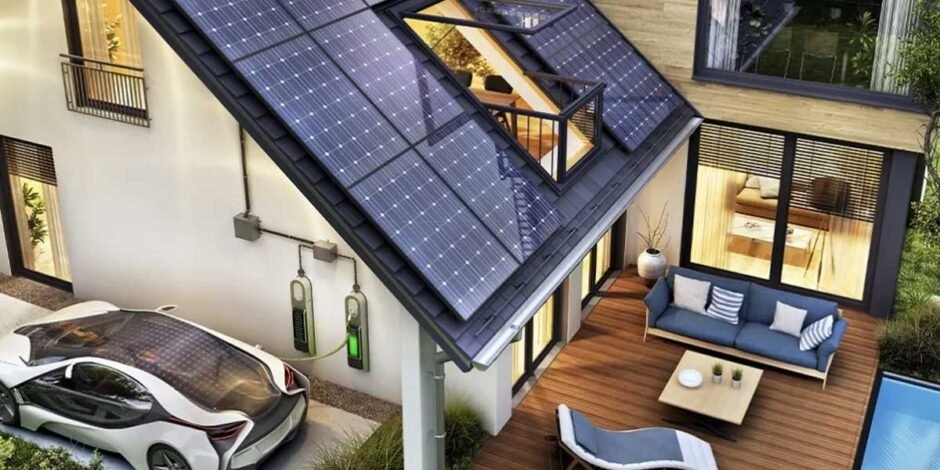
Install Solar Panels
It’s only getting hotter, and with energy costs rising, it’s more important than ever to reclaim at least some energy independence. Installing solar panels on your home can help you save between $37,000 and $154,000 over the solar panel’s 25-year lifespan (see why a metal roof, with a lifespan of 50 to 70 years, is preferred?), depending on where you are located.
You can follow up with a heat pump if your home still uses a gas boiler, or even a solar water heater, to help you get even more savings out of your solar panels.
Fully Insulate Your Home
Bring in an expert to analyze your home and the type of insulation your home uses. Some forms of insulation in the past are no longer recommended, either because more efficient options are available or because they pose potential dangers.
Either way, it’s important to explore the next generation of insulation options. Even something as simple as insulating your attic or the room over your garage can make it easier and cheaper to heat and cool your home.
Use Natural Cooling Design Methods
There are ways to cool your home without using air conditioning, allowing you to save big over summer (at least until the heat waves pass through). You can:
- Install shutters outside your home. If they have slats, ornate designs, or other small holes, the wind will be forced through and act as a super cooler for your home.
- Add blackout blinds or curtains to your windows to block out the sun on particularly hot days.
- Plant trees around your home. The shade they cast can help cool the area around them by as much as 14°F cooler.
Upgrade to Low-Flow Systems
If you find your water bill has been massively increasing, there are a few ways you can cut it down. The first is to upgrade your water systems. Some upgrades will be incredibly easy. You could, for example, just change out your shower head or taps.
Pricier upgrades include low-flow toilets and more water and energy-efficient dishwashers and washing machines.
Greywater Systems
The most eco-conscious homeowners could even look into setting up a greywater system. This essentially means you can keep the wastewater from sinks, showers, or your washing machines (but not toilets or kitchen sinks) to be reused. The water can be used for watering your plants outside, or even in your toilets to be flushed later.
They work by first diverting the water from select pipes, and then filtering out the waste and soap. The water is then temporarily stored until it can be used to water your plants or toilets.
Smart Home Systems
The final tip is to install a smart home system. These work to minimize the amount of time your HVAC system is on and maximize your home comfort. You can connect your phone, for example, to your smart home system. This way, your air conditioning or heating only turns on when you are a certain distance away from your home, and automatically turns off when you leave it (or when the last person leaves).