
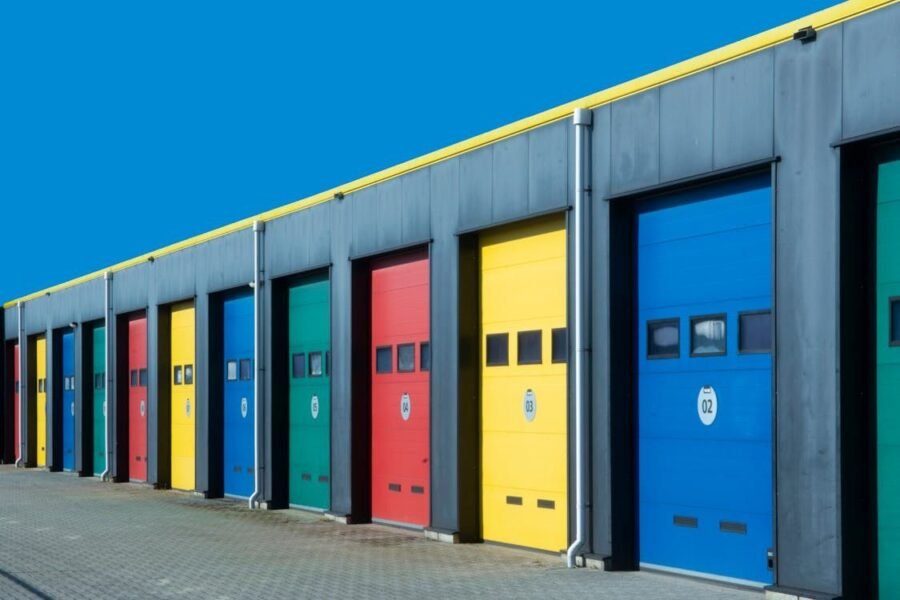
Temperature control in a commercial space is significantly influenced by movement and how often the building interacts with the outside environment. Entry points sit right at that intersection. Every time a door opens, it creates a brief exchange between two different climates. In low-traffic settings, that might not matter much. In high-use layouts, those moments add up quickly and begin to affect how the entire space performs.
In facilities with constant activity, entry points act almost like pressure valves. They release conditioned air and pull in external temperatures in ways that aren’t always visible but are definitely felt. A space that seems well-regulated on paper can struggle in reality simply because of how its entrances are designed and used.
High-Performance Doors in Heavy-Traffic Zones
In areas where doors open repeatedly throughout the day, the type of door installed has a direct impact on temperature stability. Standard doors may function well in low-use environments, but under constant cycling, they allow frequent heat exchange. Each opening releases conditioned air and invites outside temperatures in, creating a pattern that HVAC systems have to continuously correct.
At this point, insulated systems prove their worth. Choosing to install Thermacore commercial doors in these high-traffic zones introduces an element of resistance against that exchange. These doors are designed to limit heat transfer during both open and closed states. Hence, this reduces the frequency and intensity of temperature swings, allowing the indoor environment to stay closer to its intended setting even during peak activity.
Managing Temperature Swings from Frequent Openings
Every door cycle creates a small disruption. In a busy commercial setting, those disruptions happen back-to-back without much recovery time. The result is a constant fluctuation that HVAC systems are forced to chase. Instead of maintaining a steady temperature, the system works harder to compensate for repeated losses and gains.
This ongoing adjustment affects both comfort and efficiency. Workers may notice uneven temperatures across different zones, while energy use increases behind the scenes. Recognizing how frequent openings contribute to this pattern allows for better planning. It encourages solutions that reduce the impact of each cycle rather than relying entirely on mechanical systems to correct it afterward.
Controlling Heat Loss at Loading Docks
Loading docks present a unique challenge because they often involve larger openings and longer exposure times. When goods are being moved in and out, doors may remain open for extended periods, allowing significant amounts of air to move freely between the inside and outside environments. This can quickly alter the temperature of nearby areas and spread further into the facility.
Without proper insulation or protective measures, these zones become major points of thermal imbalance. Cold air can rush in during cooler months, while heat builds up during warmer conditions. Tackling this issue requires designing the dock area in a way that limits how much external air enters and how far it travels within the space.
Avoiding Direct Airflow Paths Across Entrances
The placement of entry points can create unintended airflow issues. When doors are positioned directly across from each other, they form a path that allows air to move straight through the building. This movement may not always be noticeable at first, but it gradually disrupts the controlled environment inside.
Air traveling along these paths carries external temperatures deeper into the facility. It can create pockets of warmer or cooler air that conflict with the intended settings. Adjusting the layout to avoid these direct alignments can reduce that effect.
Limiting Open Time with Automatic Closures
The amount of time a door stays open plays a major role in how much air exchange occurs. Even a few extra seconds per cycle can increase the total volume of air moving in and out over the course of a day. In high-use environments, like warehouses, those seconds accumulate into a noticeable impact on temperature stability.
Automatic door closures help control that variable by reducing open time without relying on manual action. Doors close promptly after each use, limiting exposure to external conditions. This simple adjustment creates a more controlled interaction between the indoor and outdoor environments.
Impact of Foot Traffic on Temperature Zones
Main entrances in commercial spaces often handle a steady stream of people throughout the day. Each entry and exit may seem minor on its own, yet the cumulative effect can reshape temperature distribution across nearby zones. Areas closest to the entrance tend to experience more variation, especially during peak hours when movement is constant.
However, this creates uneven conditions within the space. Some sections may feel cooler or warmer than intended, even while the HVAC system runs consistently. Recognizing this allows for better zoning strategies and layout adjustments.
Using Air Curtains to Reduce Air Exchange
Air curtains introduce a practical way to manage the constant interaction between indoor and outdoor environments. Installed above entry points, they create a controlled stream of air that acts as a barrier without physically blocking access. People and goods move freely, yet the exchange of outside air is reduced significantly.
This approach works especially well in high-traffic areas where doors cannot remain closed for long periods. Instead of relying solely on physical barriers, the system adds an invisible layer of protection.
Considering Wind Direction in Entry Placement
External conditions influence how air interacts with a building. Wind direction, in particular, can increase or reduce the amount of outside air entering through a doorway. An entrance facing prevailing winds may experience stronger airflow, which carries external temperatures directly into the interior.
Designing with this factor in mind helps limit that effect. Positioning entry points in areas that avoid direct exposure can reduce the force of incoming air.
Thermal balance in commercial layouts depends on more than equipment capacity. Entry points shape how indoor conditions hold up under constant use. Each opening and airflow path contributes to the overall performance of the space.