
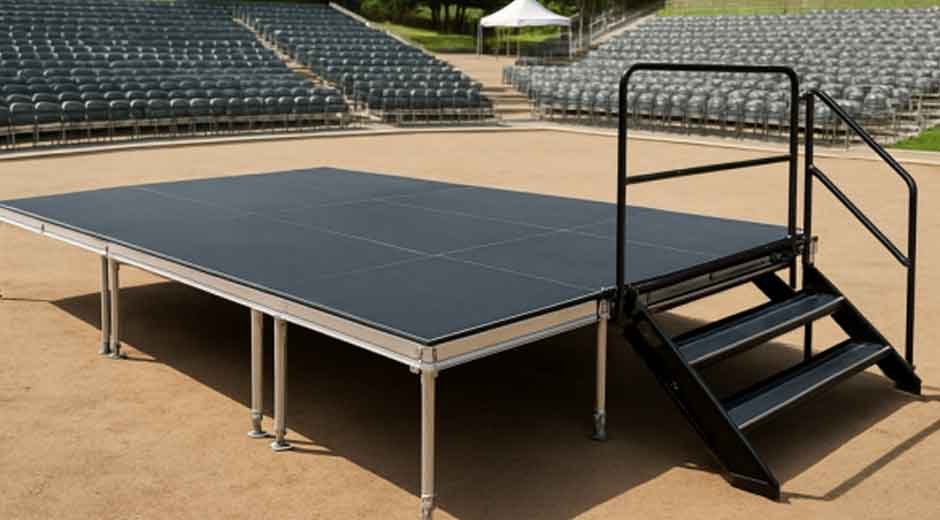
In the live events industry, time, efficiency, and reliability are constant priorities. Event planners, production crews, and venue managers operate under tight timelines that leave little room for delays. As modern productions grow in scale and complexity, the demand for equipment that minimizes setup time has become crucial. One solution that has significantly transformed workflow is the portable stage, especially in environments where a full concert stage must be assembled quickly and safely. Understanding how stage design, material engineering, and modular construction contribute to faster event execution helps organizers make more informed decisions about their production setup.
Portable staging systems are now widely used across music festivals, corporate events, community gatherings, educational institutions, and touring productions. Their impact goes beyond convenience—they directly affect labor costs, production scheduling, and the overall experience for performers and audiences. But like any solution, portable and modular systems also involve trade-offs, and choosing the right type requires evaluating factors such as durability, load capacity, terrain adaptability, and storage requirements. This article explores how these systems reduce event setup time, the efficiencies they create for production teams, and the challenges that must be considered when selecting a performance stage configuration.
Why Faster Setup Matters in Live Event Production
Events today run on extremely compressed timelines. From small community gatherings to large multi-stage festivals, planning windows have shortened while expectations for production quality have increased. A typical event schedule includes site preparation, equipment load-in, sound checks, lighting setup, rehearsals, and the actual program—all of which must happen quickly and in sync with one another. A delay in one part of the process can offset the entire schedule.
Using an event stage that can be assembled efficiently reduces pressure on crews and helps prevent bottlenecks. Traditional staging systems often require multiple technicians, heavy tools, and significant manual labor. They may involve connecting large platforms, securing heavy steel legs, or transporting bulky components that slow down setup. In contrast, a mobile stage system is engineered to minimize the number of steps required while still providing structural stability and safety.
Time saved during staging setup has a direct business impact. Faster build times mean reduced contractor hours, greater booking flexibility for venues, smoother transitions between acts, and fewer risks of overtime penalties. For touring companies, this also affects travel efficiency—if crews can pack up quickly after a show, they can reach the next destination sooner and avoid unnecessary operational costs.
How Portable Staging Systems Reduce Setup Time
Portable staging systems rely on innovations in material engineering, design structure, and modularity to streamline the assembly process. Several factors contribute to their efficiency:
1. Lightweight Construction Without Compromising Strength
Modern mobile stage platforms often use aluminum frames, composite materials, or advanced alloys that provide strength while keeping weight low. Lightweight components reduce the number of personnel required to move and position each section. While traditional staging can require four or more people to lift a single platform, some newer systems allow one or two operators to carry or wheel components.
The trade-off is that lighter materials may have limitations in load capacity compared to heavy steel stages. Organizers must balance portability with the structural needs of their event. For example, a touring rock band with heavy drum risers and multiple amplifiers may require reinforced modular stage panels, whereas a corporate speaking event may only need lightweight sections.
2. Tool-Free or Minimal-Tool Assembly
Many portable systems feature built-in locking mechanisms, snap-fit legs, and integrated support structures. By reducing or eliminating the need for wrenches, drills, bolts, and external hardware, crews save significant setup time. With fewer loose parts, the likelihood of delays caused by missing components also decreases.
However, tool-free systems may involve a learning curve for first-time users. Additionally, mechanisms must be maintained to avoid wear that could impact stability.
3. Modular Design for Flexible Layouts
Instead of constructing a full stage from scratch, modular staging systems allow planners to connect pre-built panels into any size or shape. This flexibility helps crews adapt quickly to venue constraints, last-minute changes, or unexpected obstacles such as uneven ground.
The main trade-off is storage space. Because modular panels maintain fixed dimensions, they may require larger vehicles or storage facilities between events. Still, the time saved during assembly often outweighs logistical drawbacks.
4. Faster Transportation and Site Mobility
A mobile stage system is typically designed to fold, roll, or stack efficiently. Some include integrated wheels or handles for easier movement. This reduces transport time, especially in venues where the loading dock is far from the event location.
Challenges can arise in outdoor environments, where mud, gravel, or slopes may complicate movement. Crews must plan for terrain-appropriate transport strategies, sometimes requiring carts or dollies.
5. Compatibility With Accessories and Add-Ons
Handrails, stairs, guardrails, skirting, and ramps can be attached quickly to most portable systems. Accessory compatibility prevents delays caused by mismatched equipment or custom fabrication. If the performance stage is frequently used across different event types—such as concerts, conferences, and theatre shows—having an accessory-ready design simplifies changeovers.
On the downside, accessory pieces still need to be transported and stored, adding to overall inventory management requirements.
Boosting Efficiency Across Different Types of Events
While fast setup is a universal benefit, the impact of portable staging varies based on event type. Each category presents different challenges and priorities, which is why understanding the context is important.
1. Music Festivals and Touring Concerts
Music events often involve multiple stage rotations, tight transitions, and strict schedules. A modular setup helps crews dismantle and rebuild sections between acts or adjust platform heights for different performers. This ensures smoother show flow and reduces downtime, improving audience experience.
The main challenge lies in load-bearing requirements—heavy speakers, drum kits, lighting mounts, and special effects machinery require stages that can withstand dynamic weight. Organizers must select a modular stage design rated for such capacity.
2. Corporate Events and Conferences
Corporate events prioritize aesthetics, stability, and quick turnaround—often in hotel ballrooms, convention centers, or multipurpose halls. A mobile stage system allows planners to adapt quickly to different floor plans or last-minute room changes.
The challenge here is often visual uniformity. Companies may require branded skirting or specific corporate colors. While these additions are simple, they require additional setup time.
3. Community Events and School Functions
Schools, community centers, and small venues often lack full-time technical crews. A portable system allows teachers or volunteers to assemble an event stage with minimal training. Because these events tend to be repeated annually, reusability is a major advantage.
However, budget constraints may limit access to advanced modular systems, requiring a balance between cost and convenience.
4. Outdoor and Temporary Installations
Outdoor events benefit significantly from quick assembly because setup windows can be affected by weather conditions. A modular stage that assembles quickly minimizes crew exposure to heat, rain, or wind. It also allows faster takedown if storms approach unexpectedly.
Terrain unevenness is the major challenge. Adjustable legs and leveling mechanisms are essential but may require additional finesse during setup.
Economic Benefits of Portable Staging Systems
Beyond time savings, portable staging systems offer clear financial advantages:
1. Reduced Labor Costs
Fewer crew members are needed to assemble a modular stage, and they spend less time doing it. This directly reduces wage expenses and overtime fees.
2. Lower Maintenance and Storage Costs
Lightweight materials tend to resist corrosion, reducing long-term maintenance. The ability to fold or stack components also lowers storage facility requirements.
3. Reusability Across Event Types
Because the same performance stage can be reconfigured for different events, companies reduce the need to rent or purchase multiple stage types.
4. Faster Turnaround Between Events
Venues can host more events in less time. This maximizes revenue for hotels, halls, and event spaces.
Trade-Offs and Challenges When Selecting a Portable Staging System
Choosing the right system requires evaluating several practical considerations:
1. Load Capacity vs. Weight
Stronger stages often weigh more. Lighter mobile stage platforms may be easier to use but may not support heavy equipment. Users must match the stage’s capacity to their event needs.
2. Durability vs. Portability
Highly portable stages may use materials that, while strong, are more prone to scratches or dents compared to heavier steel stages. The expected frequency of use should guide the choice.
3. Flexibility vs. Stability
Modular systems provide layout flexibility, but more joints mean more potential points of instability. Good engineering minimizes this, but users must be aware of setup best practices.
4. Cost vs. Features
Advanced systems come with integrated connectors, adjustable legs, and reinforced panels—but cost more upfront. Budget-focused buyers must weigh investment value against immediate needs.
The Importance of Considering Operational Impact
Decisions about staging extend far beyond the physical structure itself. They affect multiple aspects of event operation:
- Scheduling: Faster setup enables tighter timelines and improves punctuality.
- Safety: Stable platforms reduce the risk of accidents during performance or setup.
- Crew Morale and Efficiency: Easier setup reduces physical strain and improves workflow.
- Audience Experience: Smooth transitions and minimal downtime enhance overall event quality.
- Long-Term ROI: A well-selected modular stage reduces recurring rental costs, maintenance expenses, and operational delays.
Event organizers must evaluate not only the technical specifications of staging systems but also how each choice affects their logistical, financial, and operational outcomes.
Final Thoughts
Portable staging systems have transformed the way events are planned and executed. By minimizing setup time and simplifying workflow, they enable smoother transitions, reduce labor costs, and enhance production quality. Whether used for music festivals, corporate conferences, school functions, or community gatherings, modern staging solutions offer a compelling balance of efficiency, portability, and professional-grade performance.
While trade-offs exist—particularly in load capacity, durability, and cost—the benefits often outweigh the limitations for most event organizers. By selecting a mobile stage or modular stage that aligns with their operational needs, planners can improve efficiency across every phase of their event. As staging technology continues to evolve, the ability to build a reliable, adaptable event stage quickly and safely will remain one of the most valuable assets in the live events industry.