
Selecting safety footwear isn’t a branding exercise. It’s a risk management decision.
Different job sites impose different demands. A civil construction crew working across uneven ground faces different pressures to a warehouse team operating primarily on sealed concrete. Yet the mistake many workers make is assuming all safety boots perform equally once they meet Australian Standards.
They don’t.
The first consideration should always be hazard exposure. Impact protection is non-negotiable in environments with overhead work or moving equipment. Penetration-resistant soles are essential where debris or sharp offcuts are common. Slip resistance becomes critical in areas exposed to moisture, oil or dust build-up.
Beyond compliance, long-term structural performance matters.
Boots that begin comfortably can deteriorate quickly under daily load. Cushioning compresses. Heel support weakens. Tread depth reduces. As this happens, fatigue increases, particularly in roles requiring constant movement or prolonged standing.
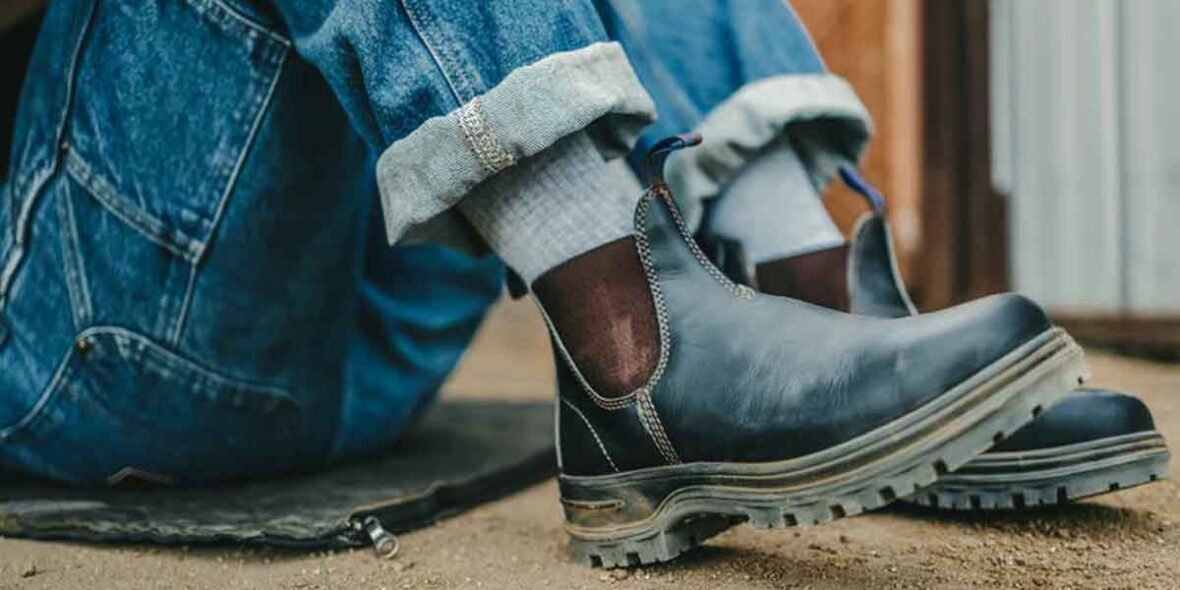
Experienced supervisors often recommend established models such as blundstone work boots because they tend to maintain their support and grip over time. Reliable midsole construction and stable outsoles reduce the gradual decline that leads to discomfort and distraction on-site.
The steel versus composite toe decision should align with the working environment. Steel provides maximum impact resistance and remains common in heavy industrial settings. Composite alternatives offer lighter weight and electrical hazard advantages in certain applications. Both can meet required standards, but suitability depends on role-specific exposure.
Water resistance is another practical consideration. Outdoor crews regularly exposed to wet ground or rain require footwear that maintains internal dryness without compromising breathability. Persistent moisture contributes to blistering and reduces overall comfort, which can affect mobility.
Fit should not be treated casually. Boots must allow natural toe movement while preventing heel slippage. Poorly fitted footwear accelerates fatigue and increases the likelihood of strain injuries. From a management perspective, encouraging proper-fitting boots, ideally at the end of the day when feet are slightly swollen, leads to better long-term outcomes.
Footwear also needs to integrate with broader workwear choices. Reinforced trousers, appropriate sock selection and supportive insoles all influence performance. Treating boots as part of a complete workwear system improves overall protection.
Ultimately, selecting the right safety boots is about consistency. Workers require equipment that performs the same way on Friday afternoon as it did on Monday morning. When footwear maintains structure, grip and support under demanding conditions, it reduces preventable strain and supports sustained productivity.
Tough jobs demand dependable gear. The decision should always be guided by durability, compliance and real-world performance – not short-term cost savings.