
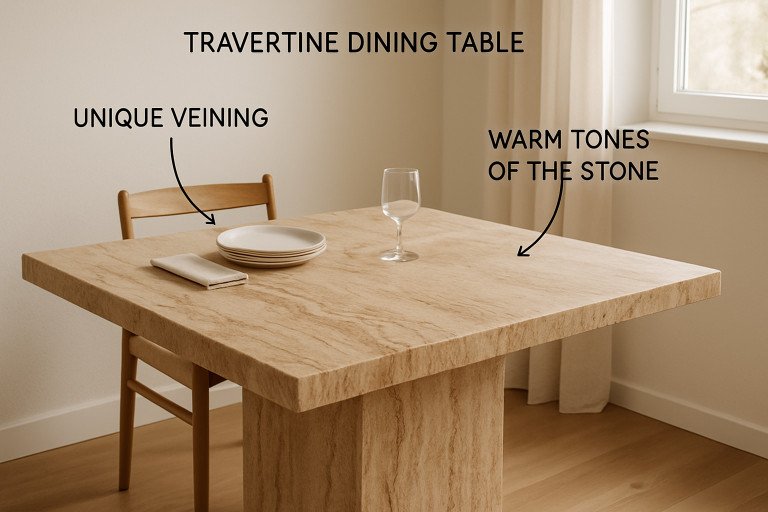
Travertine dining tables have long secured their place as a preferred option for discerning homeowners and designers. The remarkable blend of enduring elegance and natural stone craftsmanship gives these tables a unique presence in dining spaces across the world. The rich veining, earthy warmth, and distinctive textures of these tables make them more than just furniture—they become focal points that enrich the overall ambiance. When you invite guests to your home or gather your family around a travertine table, you’re not just offering a meal; you’re providing an experience set against a backdrop of timeless beauty. Explore the refined aesthetics and lasting value of natural stone dining tables, and discover why travertine continues to captivate those seeking quality and style.
Travertine has been utilized in homes and monumental architecture for centuries, from ancient Roman structures to contemporary interiors. This stone, celebrated for both its visual beauty and practical strengths, blends seamlessly with a wide range of décor themes. Whether it’s the arches of the Colosseum in Rome or a modern open-plan dining room, travertine’s unique qualities shine through. Homeowners appreciate not only its visual appeal but also its reliability for everyday use, which contributes to its reputation as a timeless choice for dining rooms. Knowing that this material has withstood the test of time, owners enjoy a sense of history and enduring sophistication every time they gather for a meal.
Natural Beauty and Unique Patterns
Every travertine dining table tells its own story through captivating veining, subtle tonal shifts, and intricate textural variations created by mineral deposits over millions of years. The geological processes that form travertine yield stone surfaces that are truly unrepeatable, making each table as unique as a fingerprint. No two travertine slabs are identical, ensuring each table brings a one-of-a-kind personality to your dining area. This inherent uniqueness is especially valued by interior enthusiasts who want their living spaces to reflect character and authenticity. The neutral color palette, ranging from creamy beige to warm taupe, allows travertine to complement both modern and traditional décors. Whether the rest of your room is sleek and contemporary or classic and ornate, travertine quietly anchors the aesthetic, inviting light to play gently across its surfaces and adding a tactile dimension to your space.
Durability and Practicality
Travertine has a proven track record for strength and long-lasting performance. Its reputation as a sturdy and reliable material has made it an architectural favorite for thousands of years. When properly sealed, it resists heat and daily wear, making it an excellent choice for spaces where meals, gatherings, and celebrations occur regularly. Unlike wood tables, which can be easily scratched or dented, or glass tables, which may chip or shatter, travertine preserves its sleek surface for years with minimal visible aging. This practical resilience is one of the reasons travertine’s timeless charm continues to hold steady, even as trends in furniture design evolve.
Versatility in Design
The adaptability of travertine ensures it sits comfortably in a variety of settings. Its natural hues can easily match both monochromatic and colorful schemes, and its understated elegance makes it a solid foundation piece for nearly any interior vision. Its neutral tones work well with a spectrum of decorating approaches, from the sharp lines of contemporary interiors to the more rustic feel of farmhouse spaces. Travertine tables are available in shapes and sizes tailored to both compact apartments and grand gathering rooms. Whether paired with sleek metal chairs or upholstered seating, these tables act as a sophisticated anchor for the entire design scheme. Round or oval tables foster conversational dining experiences, while bold rectangular tables can define larger spaces. Even the table bases can range from minimalist slabs to intricate pedestals, meaning the options for style expression are almost endless.
Maintenance and Care
Caring for a travertine dining table can be straightforward with a few routine steps. The stone’s surface responds best to gentle maintenance, such as wiping with a soft cloth and a pH-neutral cleaner for regular cleaning. Avoid acidic substances, such as vinegar or citrus-based cleaners, to prevent damage to the porous stone. Periodic sealing of travertine protects it from moisture and staining, helping preserve the table’s finish. Spills should be blotted up quickly to keep the stone in optimal condition, and felt pads under heavy objects can prevent accidental etching. With these basic precautions, owners can preserve both the beauty and value of their dining table for many years.
Sustainability and Eco-Friendliness
As a natural stone, travertine stands out as an environmentally-conscious furniture option. Its durability means fewer replacements and less waste over the lifespan of your dining setup. Furthermore, because it is a naturally occurring stone quarried responsibly, it leaves a smaller ecological footprint than synthetic materials. Sustainability-focused homeowners can enjoy both the aesthetic and environmental benefits of a travertine dining table. Unlike plastics or composite woods, which may release VOCs into the home, travertine is a low-emission, fully natural material, and its production typically requires less energy than that of synthetic surfaces. Choosing travertine also supports traditional craftsmanship, further enhancing its eco-friendly appeal.
Investment Value
Purchasing a travertine dining table is an investment in both style and long-term value. These tables hold their visual and functional appeal over decades, never falling out of fashion. Homebuyers and interior designers recognize their enduring popularity, which can enhance a property’s value and market appeal. Because the demand for natural stone furnishings remains strong, a well-cared-for travertine table can continue to be a centerpiece and a conversation starter for future generations. The subtle luxury and historic durability of travertine mean that, unlike many manufactured furniture styles, your dining table never looks dated or loses relevance. Over time, this can make such tables cherished family heirlooms, passed down and appreciated by new generations.
Final Thoughts
Travertine dining tables offer a fusion of craftsmanship, practicality, and visual allure that few other materials can match. Their organic patterns and reliable performance make them a wise and timeless selection for anyone passionate about interior design. With proper care and maintenance, these tables reward their owners with a stunning and practical centerpiece that stands the test of time, ensuring every meal is enjoyed in style and comfort. Investing in travertine is not just about acquiring a table—it’s about elevating everyday dining rituals into memorable occasions, all while appreciating the ageless qualities that have defined exceptional interiors for centuries.