
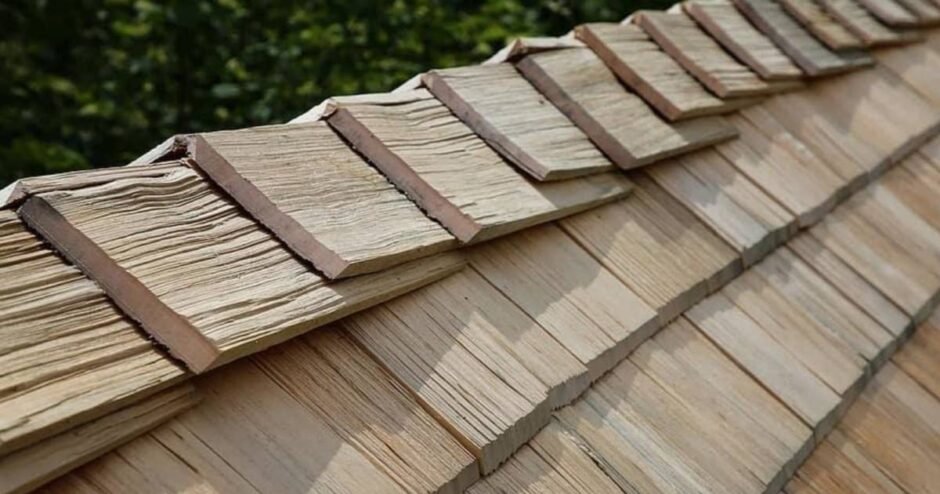
A wood shingle roof lasts 20 to 40 years on average, depending on the wood species, the grade of the shingles, the climate, and how carefully the roof was installed. At the top end, a #1 grade Western Red Cedar shingle roof with proper ventilation, installed over spaced sheathing in a moderate climate, can reach 50 years. At the bottom end, a #3 grade shingle roof in a humid southeastern climate with continuous decking and no back-ventilation may need replacement at 15 years. The range is as wide as any roofing material because wood is an organic material — it rots when wet, it splits when dry, and it burns when exposed to fire unless it is pressure-treated with fire retardant.
Wood shingles and wood shakes are different products, often confused. Shingles are machine-sawn on both faces and have a smooth, uniform appearance. Shakes are hand-split or machine-split on at least one face, giving them a rough, textured look. Shakes are thicker than shingles (½ to ¾ inch at the butt vs. ⅜ to ½ inch for shingles) and last 5 to 15 years longer as a result. The distinction matters because the Department of Energy classifies both as “naturally cool colored materials” — meaning they do not require reflective coatings to qualify as cool roofing, a property that saves energy in hot climates and is lost when the roof is replaced with a darker material.
Wood Shingles vs. Wood Shakes: The Difference in Lifespan
The manufacturing process is the primary determinant of how long the wood roof lasts. A shingle cut to a uniform thickness weathers evenly. A shake with a variable split surface weathers unevenly but lasts longer because it is thicker and sheds water more aggressively on the rough-textured face.
| Characteristic | Wood Shingle | Wood Shake |
| Manufacturing | Machine-sawn both faces | Hand-split or machine-split at least one face |
| Thickness at butt | ⅜ to ½ inch | ½ to ¾ inch |
| Appearance | Smooth, uniform | Rough, textured, rustic |
| Typical Lifespan (Cedar) | 20-40 years | 30-50 years |
| Installed Cost per sq ft | $8-$14 | $10-$18 |
| Weight per square (100 sq ft) | 200-300 lbs | 300-500 lbs |
The extra thickness of a shake matters because wood roofing weathers by erosion — rain, wind, and UV radiation slowly wear away the surface, and a thicker piece of wood takes longer to erode to the point of failure. A ⅜-inch shingle in a rainy climate loses roughly 1/64 inch of surface per year. At that rate, the shingle is functionally thin enough to crack after 24 years. A ⅝-inch shake under the same conditions reaches the same point after 40 years.
How Wood Species Affects Roof Lifespan
Not all wood resists rot and insects equally. The natural oils and tannins in the wood are the first and most important line of defense against decay, and different species contain different amounts of these natural preservatives.
| Wood Species | Typical Lifespan (Shingle) | Natural Rot Resistance | Cost per sq ft | Best Climate |
| Western Red Cedar (#1 Blue Label) | 30-50 years | High (heartwood only) | $10-$14 | All climates, best overall |
| Western Red Cedar (#2 Red Label) | 20-30 years | Moderate (some sapwood) | $8-$11 | Dry to moderate |
| Eastern White Cedar | 25-35 years | Moderate-high | $9-$13 | Northeastern U.S. |
| Redwood | 25-40 years | High (heartwood only) | $12-$18 | West Coast |
| Alaskan Yellow Cedar | 30-40 years | Very high | $14-$20 | Wet, coastal climates |
| Pressure-Treated Southern Pine | 15-25 years | Low (chemical treatment) | $6-$9 | Budget, dry climates |
The grade stamp on the shingle bundle is the single most reliable predictor of lifespan. A #1 Blue Label cedar shingle is 100% heartwood — the dense, dark inner wood from the center of the tree that contains the highest concentration of natural oils and tannins. A #2 Red Label shingle contains up to 20% sapwood — the lighter outer wood that lacks natural preservatives and rots faster. A #3 Black Label shingle contains up to 50% sapwood and is intended for undercoursing on double-layer roofs, not for the exposed weather surface. A roof built with #3 shingles as the exposed layer will show widespread decay within 10 to 15 years regardless of climate.
Installation Details That Determine How Long a Wood Roof Lasts
Wood roofing fails from the bottom up more often than from the top down. A shingle that stays dry on its underside lasts decades. A shingle that sits against a wet surface on its back rots in years. The installation details that control moisture on the underside of the shingle determine the roof’s lifespan more than the wood species or grade.
Spaced sheathing vs. solid decking. A wood roof installed over spaced sheathing — 1×4 or 1×6 boards with air gaps between them — allows air to circulate under every shingle. The shingle dries from both sides after rain. A wood roof installed over solid plywood or OSB decking traps moisture against the back of the shingle. The shingle dries only from the top, staying wet on the underside for days after a rain. The lifespan difference between spaced and solid decking is 10 to 15 years, all else being equal.
Roof pitch. Wood shingles and shakes require a minimum roof pitch of 4:12 (a 4-inch rise per 12 inches of run) for shingles and 3:12 for shakes installed with an underlayment. On a low-slope roof, water moves slowly across the shingle surface and has more time to absorb into the wood grain. The same cedar shingle that lasts 40 years on a 12:12 pitch might last 20 on a 4:12 pitch.
Exposure to weather. The length of shingle exposed to the weather — the portion not covered by the shingle above it — affects how fast the wood erodes. A standard exposure for an 18-inch cedar shingle is 5½ inches. Reducing the exposure to 4 inches increases the number of shingles per square and the cost of the roof, but it extends the lifespan by 5 to 10 years because each shingle sheds water over a smaller exposed area.
Maintenance That Extends a Wood Roof’s Life
A wood roof requires more maintenance than any other common roofing material. Neglect the maintenance, and a 40-year cedar roof becomes a 20-year roof.
- Remove debris from the roof surface every 1-2 years. Leaves, pine needles, and branches trap moisture against the wood and create localized rot pockets. A roof rake or a leaf blower from the ladder is sufficient — do not pressure-wash a wood roof, as the high-pressure spray erodes the soft grain and leaves the hard grain standing in ridges.
- Clean moss and lichen before they establish colonies. Moss holds water against the wood surface for extended periods. A zinc or copper strip installed near the ridge releases metal ions when it rains, creating a mild biocide that prevents moss growth on the roof below. The strip costs $50 to $100 and lasts 10 to 15 years. It is the cheapest life-extension product available for a wood roof.
- Apply a wood preservative or water-repellent coating every 3-5 years. A clear or lightly tinted oil-based preservative replenishes the natural oils that rain leaches out of the wood over time. The coating costs $1.50 to $3.00 per square foot applied and extends the roof’s life by roughly 30% compared to an untreated roof.
- Replace individual split, curled, or decayed shingles as they fail. A damaged shingle invites water under the adjacent shingles. Replacing one shingle costs $15 to $40 in labor and materials. Replacing the entire roof because deferred maintenance caused widespread decay costs $20,000 to $40,000.
Wood Roof vs. Other Roofing Materials: Lifespan Comparison
| Roofing Material | Typical Lifespan | Maintenance Required | Installed Cost per sq ft |
| Wood Shingle (Cedar #1) | 30-50 years | High (cleaning, treatment every 3-5 yrs) | $10-$14 |
| Wood Shake (Cedar) | 30-50 years | High | $10-$18 |
| Asphalt Shingle (Architectural) | 25-30 years | Low | $4-$7 |
| Metal (Standing Seam Steel) | 40-70 years | Very low | $8-$14 |
| Slate | 75-200 years | Low (individual replacement) | $20-$35 |
| Clay / Concrete Tile | 50-100 years | Low-moderate | $12-$22 |
Wood roofing sits in the middle of the lifespan spectrum — it outlasts asphalt shingles by 10 to 20 years but falls short of metal, tile, and slate. The real cost comparison is lifetime cost. A cedar shingle roof at $12 per square foot lasting 40 years costs $0.30 per square foot per year. An architectural asphalt shingle roof at $5.50 per square foot lasting 25 years costs $0.22 per square foot per year. The metal roof at $11 per square foot lasting 50 years costs $0.22 per square foot per year. On a pure cost-per-year basis, wood is more expensive than asphalt or metal, and the premium buys appearance and character, not financial savings.
FAQ: Common Questions About Wood Roof Lifespan
Does moss on a wood roof shorten its life?
Yes, dramatically. Moss holds water against the wood surface continuously, creating the conditions for rot in a material that would otherwise dry between rains. A wood roof with heavy moss coverage loses 5 to 15 years of service life compared to a moss-free roof of the same wood and grade. A zinc strip at the ridge is the cheapest and most effective preventive measure.
Can you still install a wood shingle roof in wildfire-prone areas?
In most wildfire-prone jurisdictions in California, Colorado, and other western states, untreated wood roofing is prohibited by building code. Pressure-treated fire-retardant wood shingles (Class B or Class A fire rating) are allowed in some jurisdictions but are more expensive and have a shorter lifespan — 15 to 25 years — because the fire-retardant chemicals leach out over time. In the highest-risk Wildland-Urban Interface (WUI) zones, all wood roofing is prohibited regardless of treatment, and the code requires Class A materials such as metal, tile, or asphalt composition shingles.
Can you paint or stain a wood roof?
Yes, but only with products specifically formulated for wood roofing — standard exterior house paint or deck stain will fail within 2 to 3 years on a roof surface. Roof-grade oil-based stains and preservatives allow the wood to breathe while protecting the surface. A solid-color stain applied at installation and reapplied every 5 to 7 years extends the roof’s life by blocking UV radiation that degrades the wood’s lignin (the natural polymer that holds wood fibers together). Proper care of specialized structural components requires a complete maintenance strategy for the entire property. While roofing materials need specialized oils or stains to limit weather damage, supporting vertical surfaces like siding and trim also depend on consistent surface care to manage moisture retention. Seeking guidance on standard coatings and application intervals can help protect these vulnerable elements from early degradation. Homeowners can visit the website to review standard residential maintenance schedules and options for keeping exterior elements structurally sound over many seasons.
Wood Shingles Can Outlast Asphalt — But Only With the Right Wood and Regular Care
A Western Red Cedar #1 Blue Label shingle roof over spaced sheathing, on a steep pitch, in a moderate climate, with zinc strips and periodic preservative treatment, will reach 40 to 50 years. The same roof built with #3 shingles over solid plywood decking, on a low-slope pitch, with no maintenance, will need replacement in 15. The wood species, grade, and installation matter more than any other variable — more than the climate, more than the pitch, more than the coatings.
If you are considering a wood roof, buy the highest grade of cedar or redwood you can afford, insist on spaced sheathing, and budget for maintenance every 3 to 5 years. If you are buying a house with an existing wood roof, look at the grade stamp on an exposed shingle in the attic. The grade tells you how many years the roof has left. A #1 Blue Label roof at year 25 has another 15 to 25 years. A #3 Black Label roof at year 15 is already past its design life.